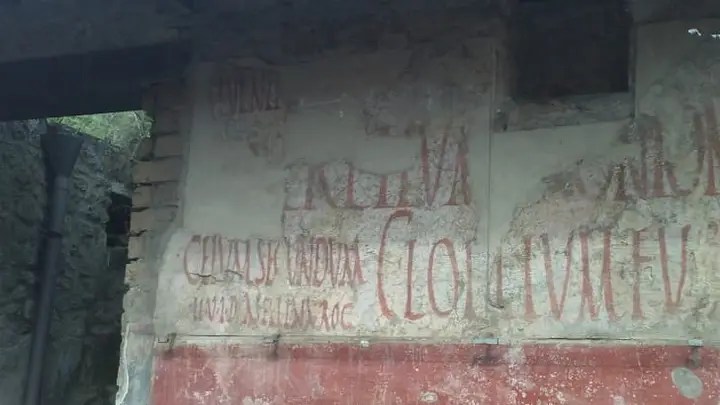
I am intending to decorate the ancient pillars with graffiti. I really like this example from a Pompei pub.
“YOU LOVE IRIS, BUT SHE DOES NOT LOVE YOU.”
These ancient, informal records read like overheard gossip. I will have to choose my own.
Translated examples include:
- Sarcastic: “Put a saw under the garden gate.”
- Insulting: “Sosinous is a lecherous fellow.”
- Party Invites: “Boy, bring new couches for the symposium.”
SATOR Square
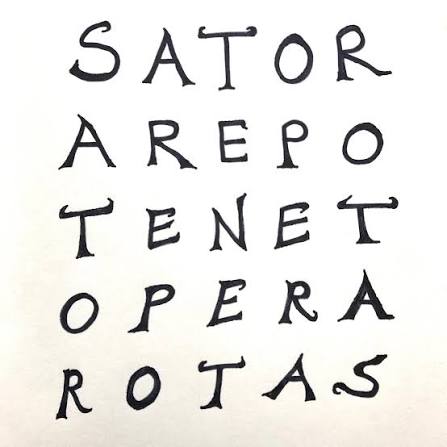
While a precise, poetic translation is debated by Latin scholars, the individual words broadly mean:
- SATOR: Sower or planter
- AREPO: Likely a proper noun or an invented name
- TENET: Holds or keeps
- OPERA: Works, labor, or care
- ROTAS: Wheels
Broadly meaning that the “The sower Arepo holds the wheels with care”. [1]
History, magic and religion
The oldest known SATOR square
The oldest known squares have been found in the ruins of the ancient Roman city of Pompeii, dating prior to 79 CE. Other notable early examples have been excavated in Cirencester, England and Budapest, Hungary.
Christian Symbolism
Because the letters can be perfectly rearranged to form a cross of the words “Pater Noster” (the “Our Father” prayer) along with the Alpha and Omega symbols, many historians believe it was a covert symbol for early persecuted Christians.
Medieval Magic
Throughout the Middle Ages and into the Renaissance, the square was embraced as a powerful magical talisman. It was widely believed that writing the words on parchment or bread could extinguish fires, cure dog bites, and relieve insanity


Leave a comment