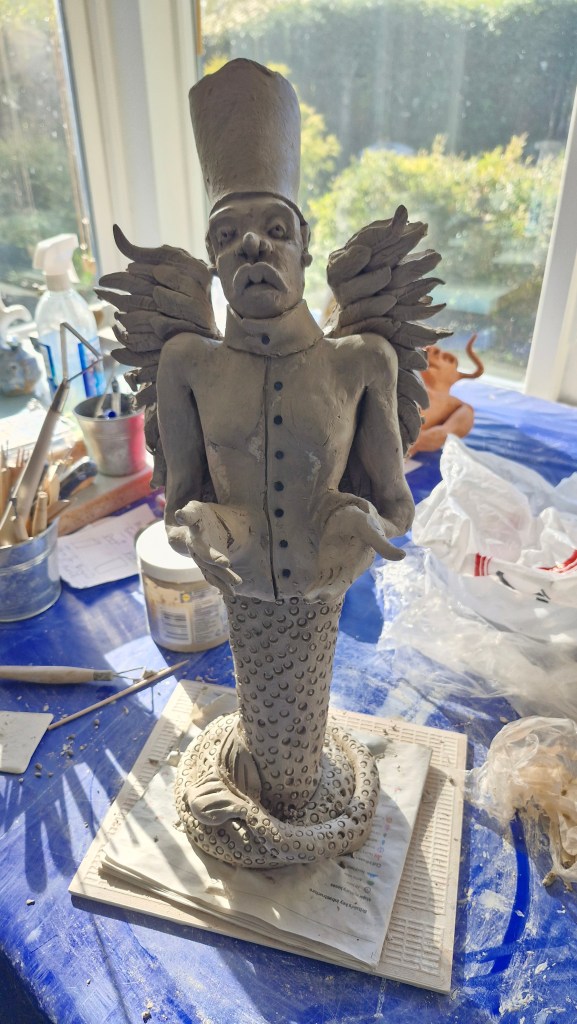
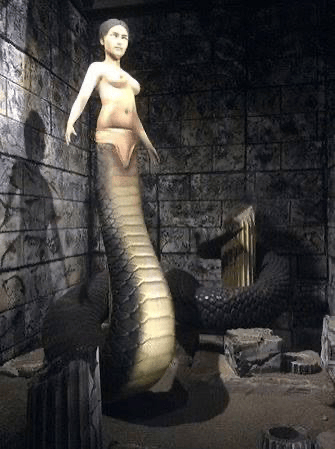
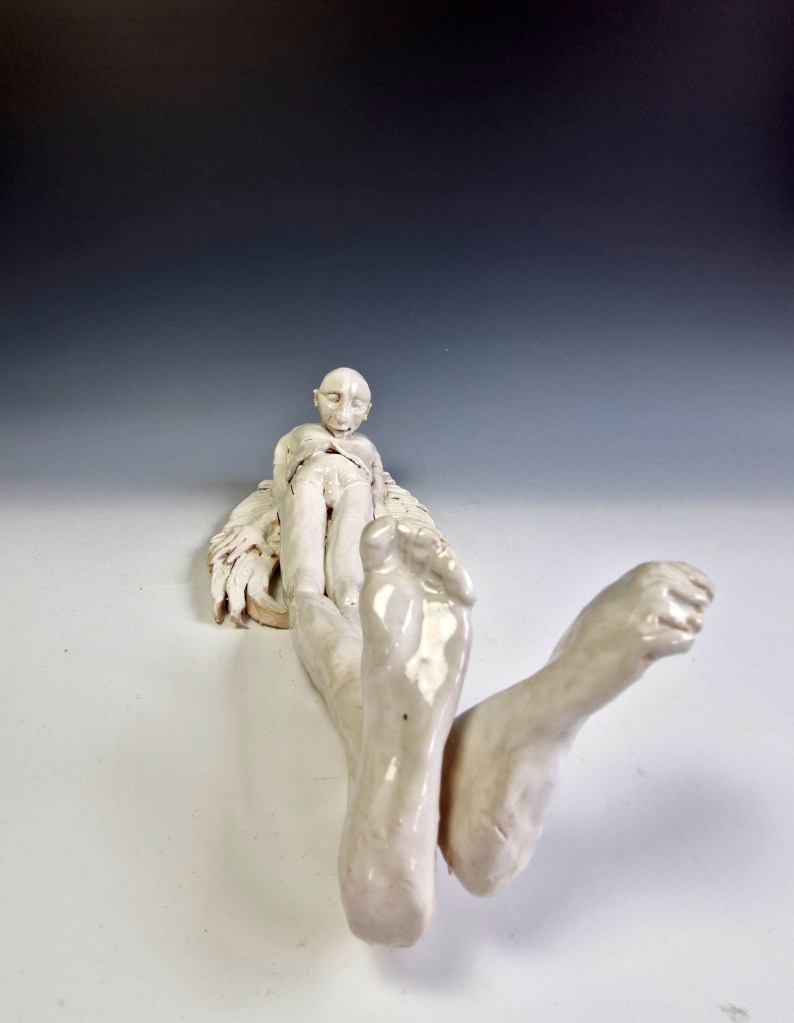
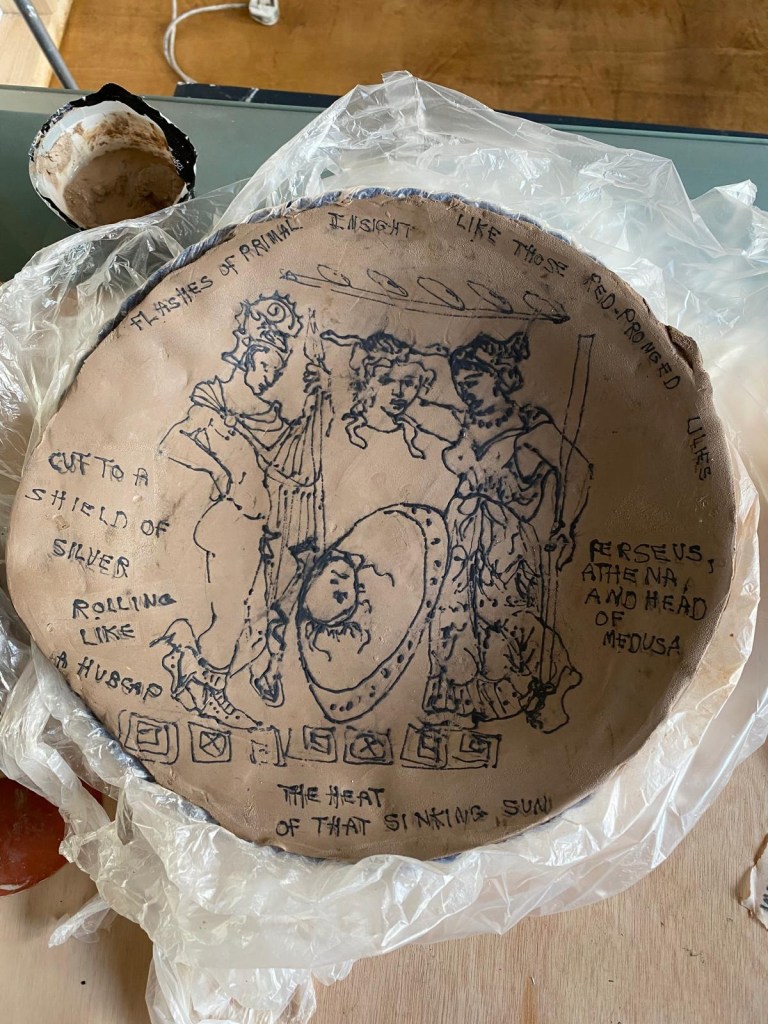
Considered to be the Father of all Monsters Typhon was the last child of Gaia, fathered by Tartarus, and, as you can see from the image below is considered the most powerful and deadliest of all creatures in Greek mythology. When he appeared a storm would arrive concealing his true form. It was said that he had a human upper half others a said he had a 100 dragon heads. His hands were huge so he could hold the world.
Typhon’s wife was Echidna and she gave birth to many monsters
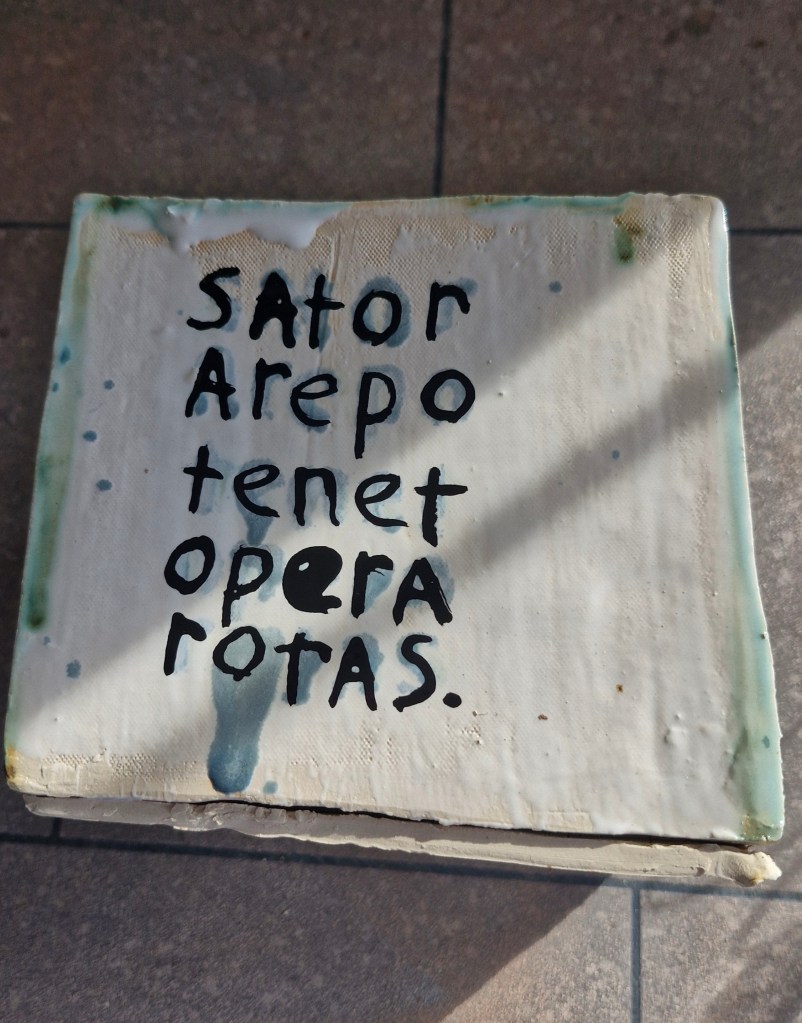
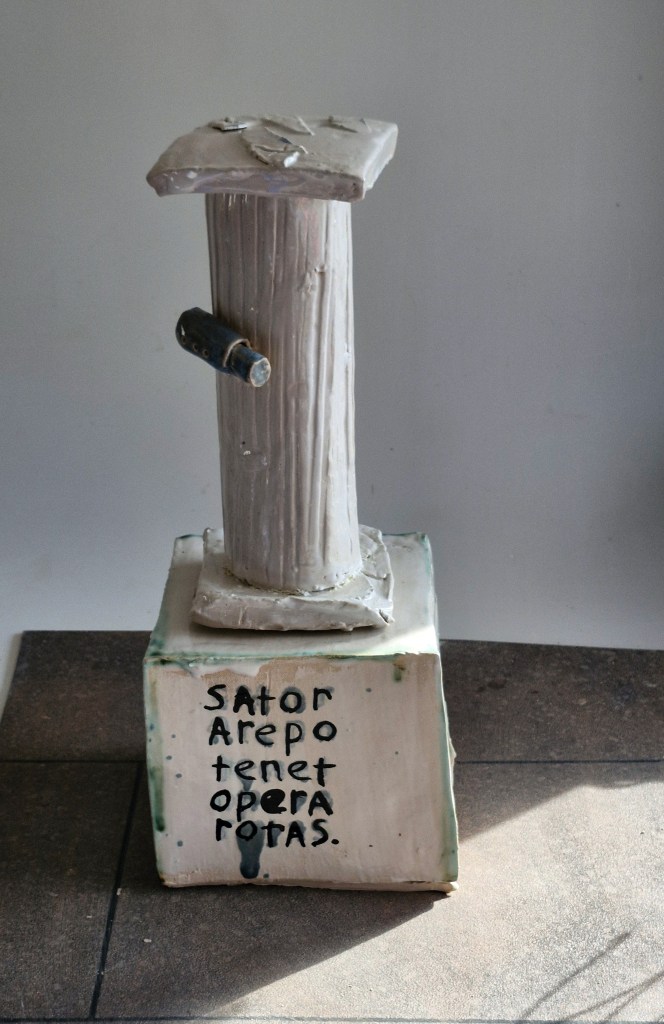
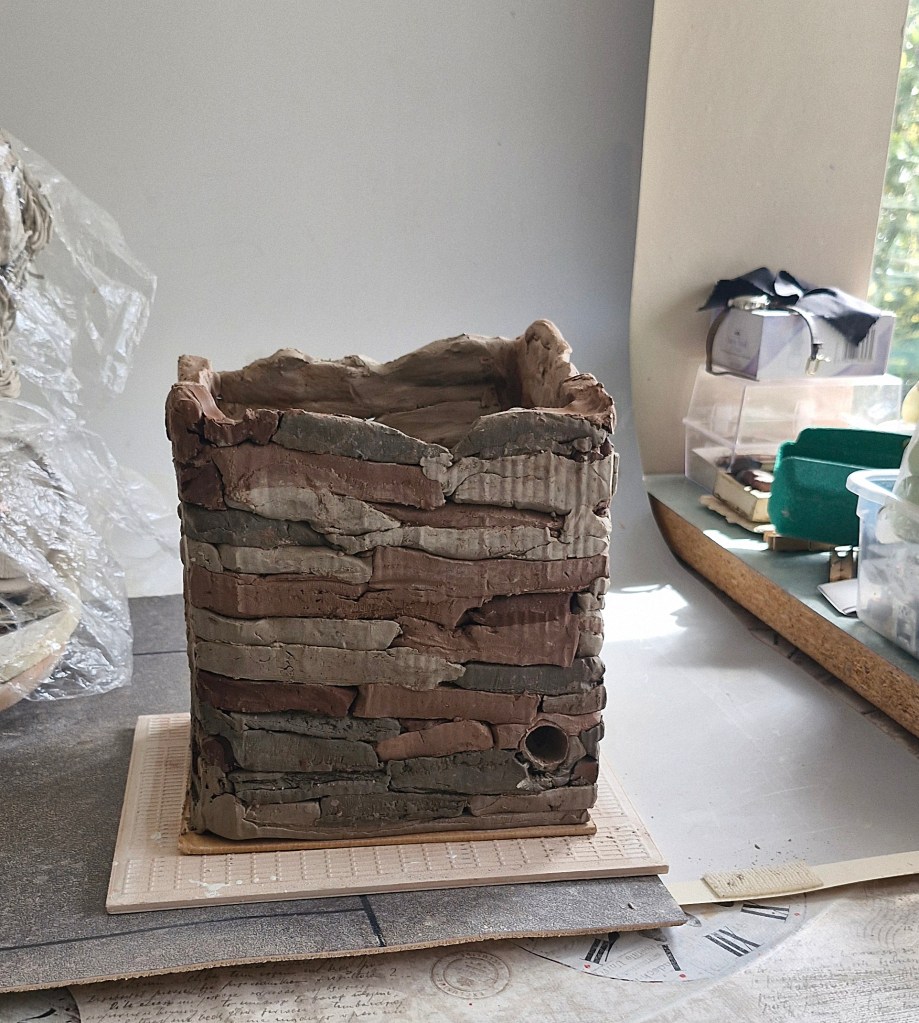
One of my big towers will stand on a SATOR square which is an ancient 5 by 5 Latin word grid.
This grid consists of five five-letter words: SATOR, AREPO, TENET, OPERA, and ROTAS.
Sator: Sower, planter, or creator
Arepo: Most likely a proper name or even an invented word
Tenet: Keeps
Opera: Work or endeavors
Rotas:Wheels or ploughs
When you read all these letters/words together as a sentence it means
“The sower Arepo holds/guides the wheels with care.”
History of the SATOR Square
The earliest versions date back before 62 CE and have been found in the ruins of Pompeii.During the Middle Ages, people used the square as a magical charm to ward off fires, thieves, sickness, and evil spirits. Early Christians rearranged the letters into a cross spelling out Pater Noster (Our Father) twice, with the leftover letters representing Alpha and Omega.
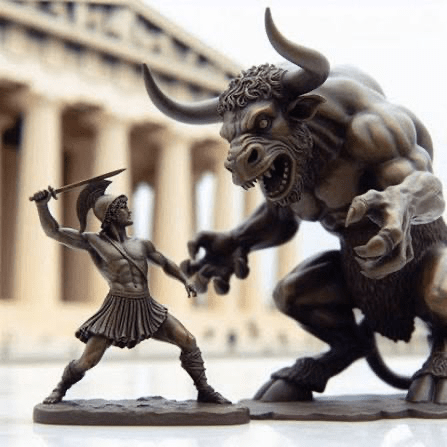
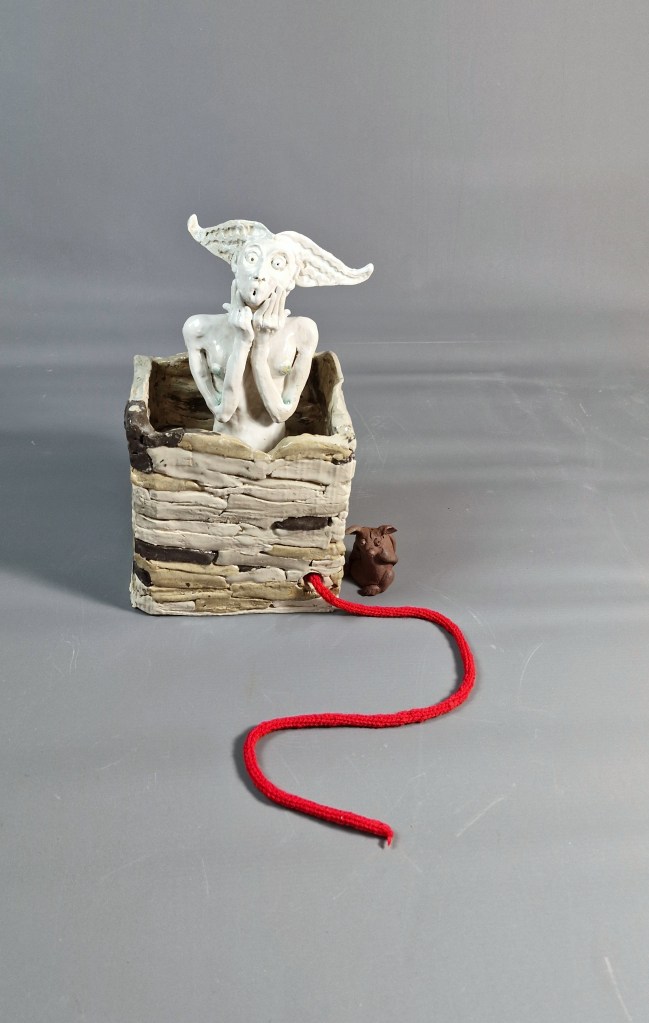
Ariadne was a princess from Crete and the daughter of King Minos and Queen Pasiphae. She fell involve with the Athenian hero, Theseus. She gave him a ball of thread to help him navigate the Labyrinth and defeat the Minotor.
So far, I have a maze, Ariadne, the red cord is in production but I do not seem to have a Minotor or Theseus. This might be fun to include. I think I might have fun making a minotor.
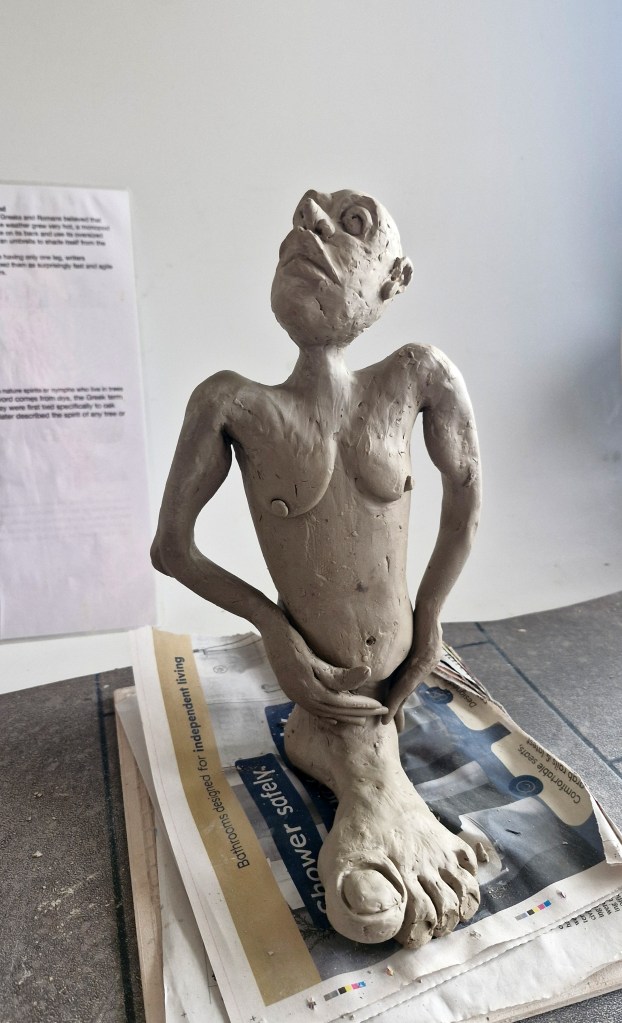
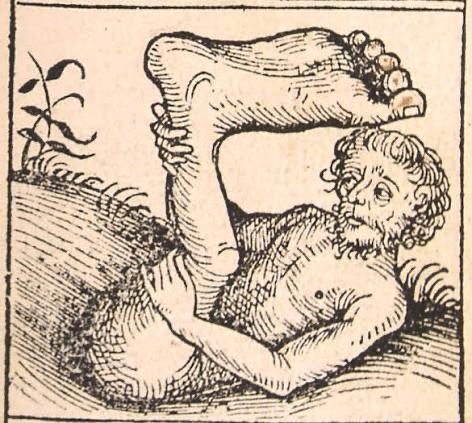
Just for fun, and because I like making feet, I thought I would make a Monopod.
Ancient Greeks and Romans believed that they it grew very hot, a monopod would lie on its back and use its oversized foot as an umbrella. We could have done with that in the 2026 heatwave.
Despite having only one leg they could hop very fast indeed.
Balancing on a post is my pizza delivery boy Eros. Eventually he will have a golden peak to his cap and may be the the heart ventricle will be acrylic painted red?
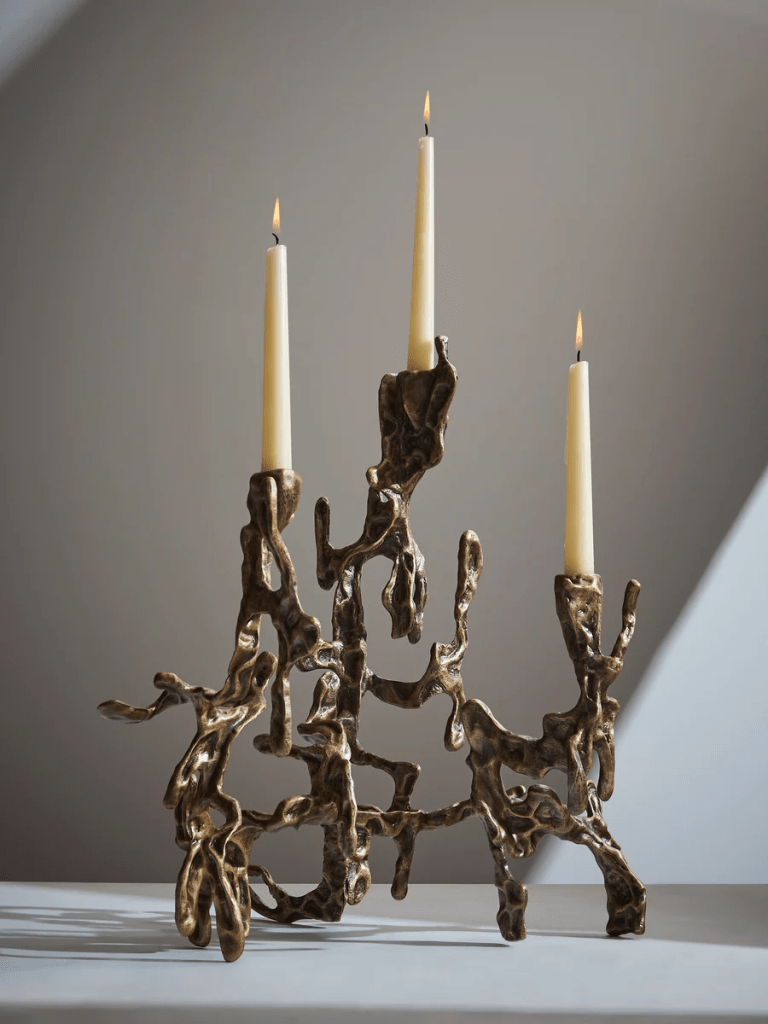
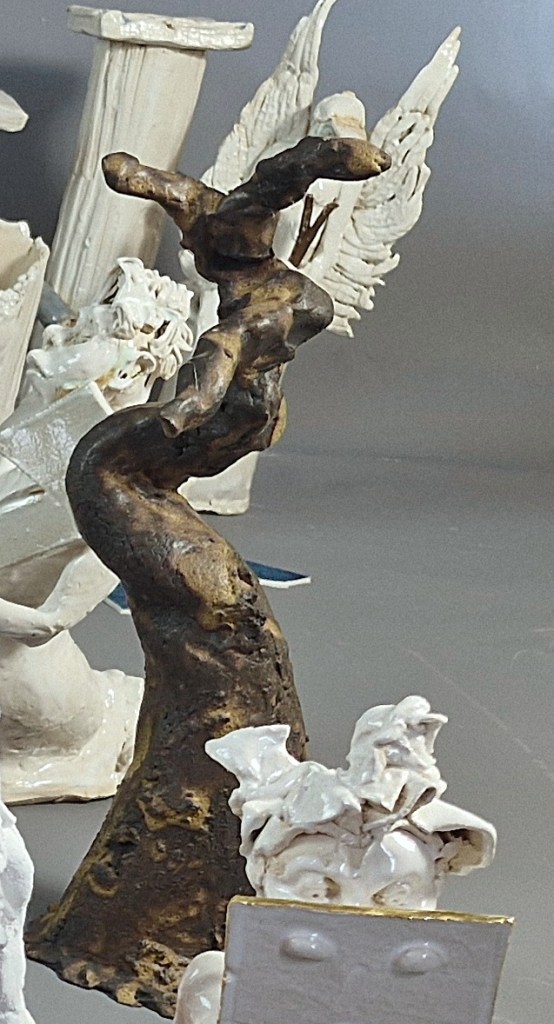
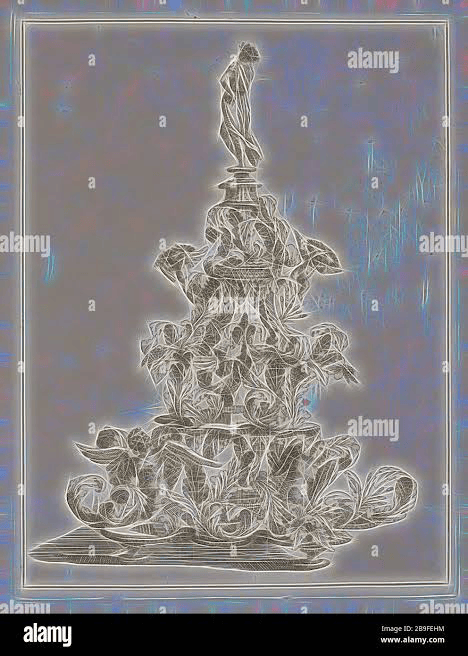
The classic Surtout arrangement which I am following has a candelabra at the centre. Rather than creating a classic Greek style candle holder with nymphs holding candles I have decided to go for a more organic look which will be in direct contrast but compatible with my dystopian world. The dystopian world already has two gnarled brown trees in it so the woody candelabra should sit nicely with that. This candelabra which is a lot like my two existing trees is an inspiration.
What the trees and the tree candelabra represent
Metamorphosis: Twisted, bent wood represents mortals transformed into tree such as Daphne or Myrrha or even the Dryads who were not turned into trees but where in fact minor goddesses in the form of trees,
Promethean Fire vs. The Wilderness: Candelabras represent enlightenment, sacrifice, and the Promethean gift of fire. Placing fire on top of a woody tree-like base highlights the tension between the wild natural order and the unrestrained soak or human ambition.
The Sacred Grove: Wood was central to ancient Greek religious practice. It was the material used for creating early statues (xoana), whilst trees marked the boundaries of sacred groves where mortals communicated with deities.
Cracked Myth Surtout
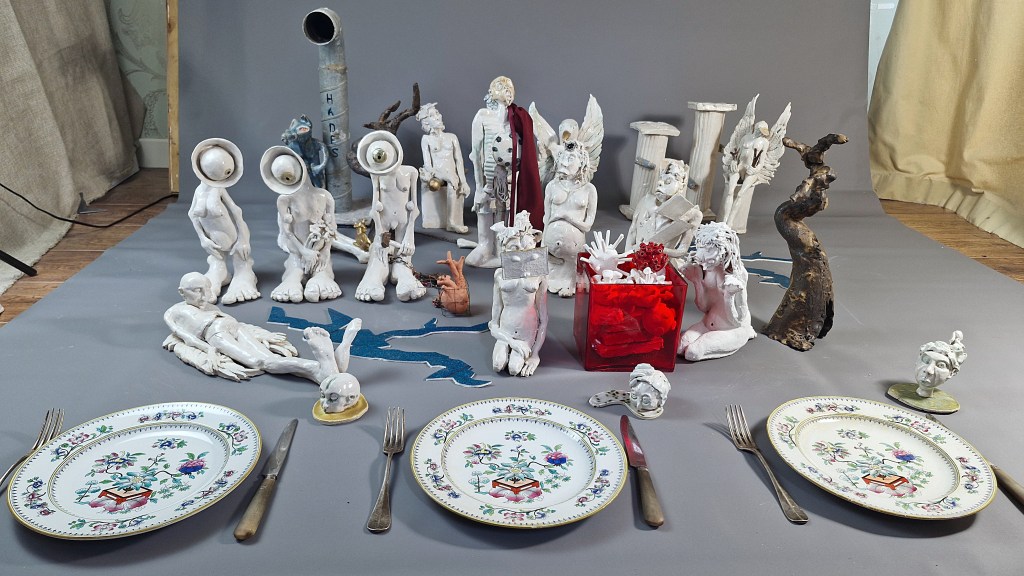
This is the look I am aiming for with many more gods, goddesses and monsters and a candelabra in the middle. The artist Oska Lappin will be providing the hand built and decorated plates. Here is an early example before adding of colour and final iring.
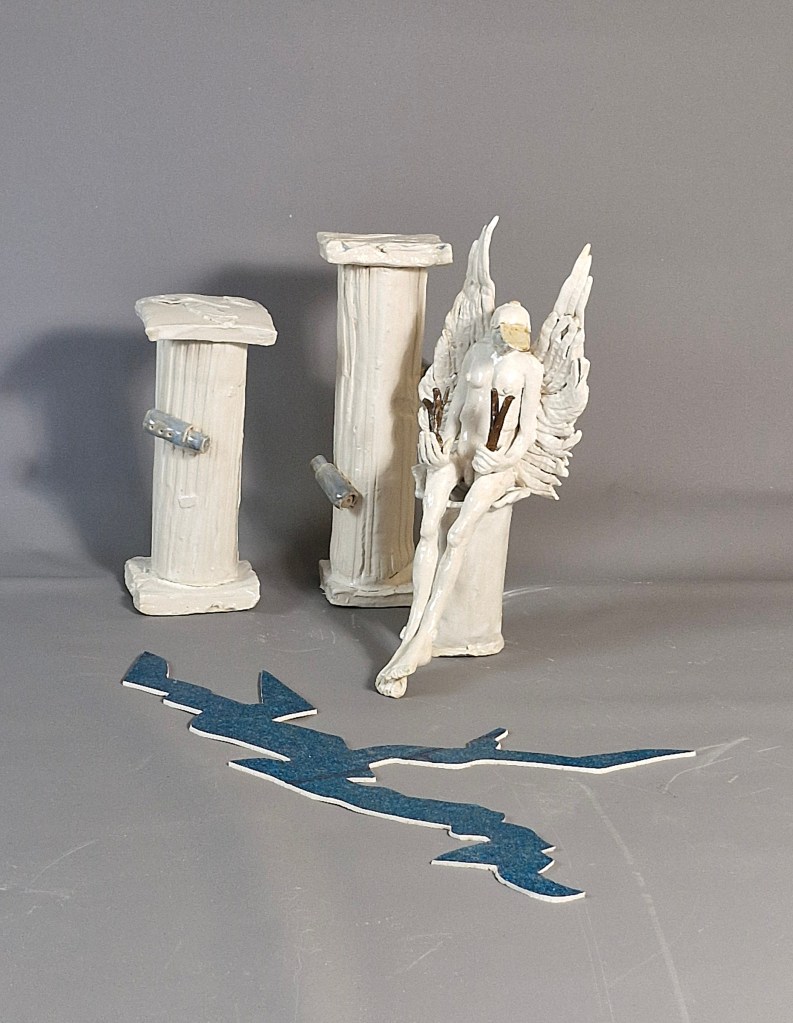
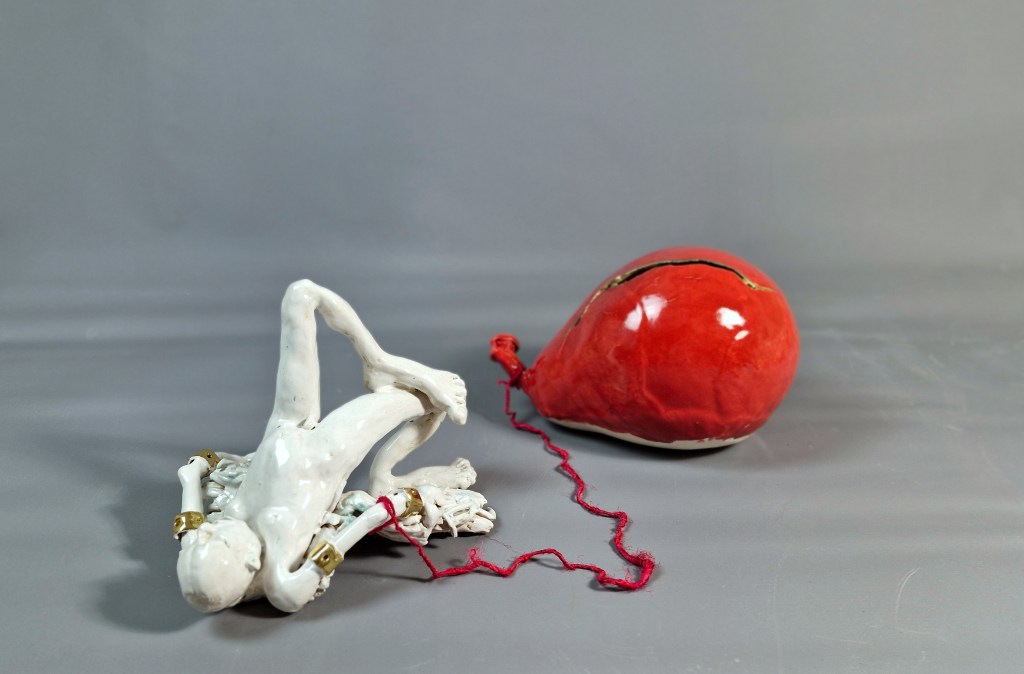
I have already made a set of Icarus figures – the Icarus Project, but am keen to develop this further as the centrepiece of the Cracked Myths installation.
Icarus is not a god but a mythical figure and metaphor that is continually used to describe humans as they unwittingly fall from grace. This Icarus, as well as his wings, was using a red balloon to keep him up in the air. As you can see a big crack in the balloon appeared….his attempt most definitely failed.
I am also planning to work with my friend, and fellow potter Oska Lappin, to create a surtout display on a dining table size space with plates and cutlery. I am proving the ceramic display and she will provide the beautiful decorated plates echoing the theme of the exhibition.
A ceramic surtout de table or a very grand dining centrepiece usually features a mirrored plate framed by ceramic figures, candelabra and tazzas. The ceramic installation functions as the focal point of a table setting, visually elevating candlelight and floral arrangements. It will be interesting visually to follow these conceits, as I am already aware that the addition of the dining plates to the Cracked Myths figures has made the view considerable more attractive. So tazzas and candelabra it is – my to do list grows ever longer…
A Tazza is a shallow bowl suspended on a decorative support.
Surtout Display Techniques
To exhibit ceramics in the spirit of a traditional surtout de table, artists and curators employ specific display elements:
Reflective Platters: Using mirrored glass, polished metal, or gilded bronze bases to reflect the undersides and intricate glazing of the ceramic objects.
Tiered Platforms: Staging vessels and sculptures at varying heights to create architectural depth, echoing historical multi-part centerpieces.
Modular Groupings: Arranging dozens of individual, hand-crafted objects to flow across the surface, treating the entire table as an interconnected installation.
Description, history and modern art usage
A surtout de table is a grand, decorative centrepiece placed on formal dining tables. Bouke de Vries dramatically modernizes this historic tradition by using shattered porcelain, antique shards, and plastic elements to create complex narratives on the tabletop. The history of the surtout de table ranges from ancient confectionery architecture to modern art installations.
The surtout de table is said to have first appeared in 1692 at the meals for the wedding of Philippe II, Duke of Orléans and Louis XIV’s legitimized daughter Françoise Marie de Bourbon, as “a great silver gilt piece of a new invention”. At first it was designed to hold candles, condiments, and other clutter on the table, and protect a polished wooden table from the staining caused by spillage from the salt and vinegars in the condiments. During the first half of the 18th century as the sugar sculpturetrionfo declined, the surtout de table evolved to fill its role.