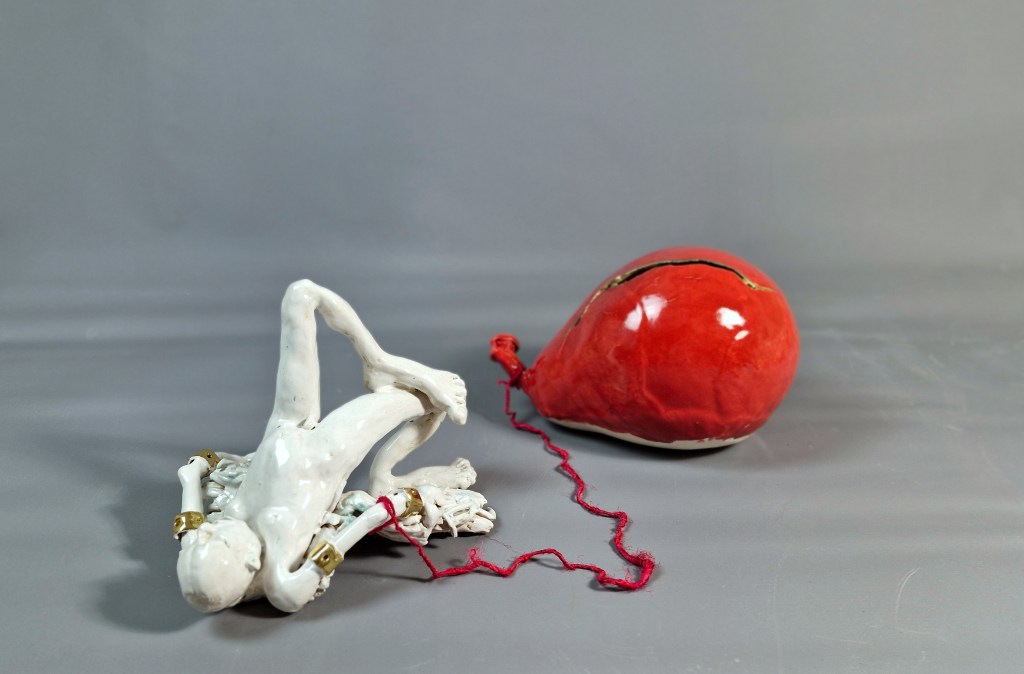
I have already made a set of Icarus figures – the Icarus Project, but am keen to develop this further as the centrepiece of the Cracked Myths installation.
Icarus is not a god but a mythical figure and metaphor that is continually used to describe humans as they unwittingly fall from grace. This Icarus, as well as his wings, was using a red balloon to keep him up in the air. As you can see a big crack in the balloon appeared….his attempt most definitely failed.
I am also planning to work with my friend, and fellow potter Oska Lappin, to create a surtout display on a dining table size space with plates and cutlery. I am proving the ceramic display and she will provide the beautiful decorated plates echoing the theme of the exhibition.
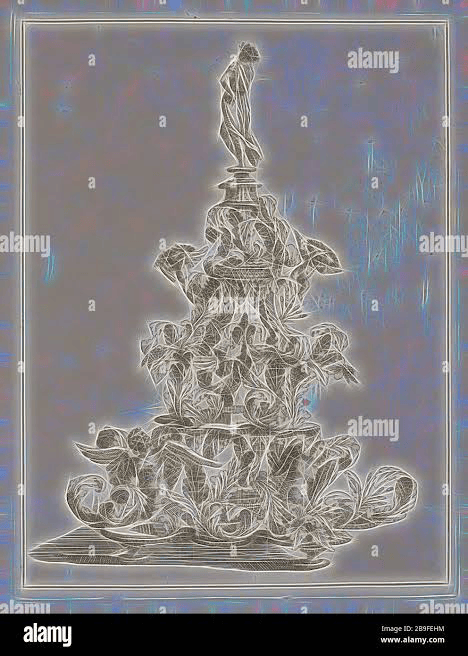
A ceramic surtout de table or a very grand dining centrepiece usually features a mirrored plate framed by ceramic figures, candelabra and tazzas. The ceramic installation functions as the focal point of a table setting, visually elevating candlelight and floral arrangements. It will be interesting visually to follow these conceits, as I am already aware that the addition of the dining plates to the Cracked Myths figures has made the view considerable more attractive. So tazzas and candelabra it is – my to do list grows ever longer…
A Tazza is a shallow bowl suspended on a decorative support.
Surtout Display Techniques
To exhibit ceramics in the spirit of a traditional surtout de table, artists and curators employ specific display elements:
Reflective Platters: Using mirrored glass, polished metal, or gilded bronze bases to reflect the undersides and intricate glazing of the ceramic objects.
Tiered Platforms: Staging vessels and sculptures at varying heights to create architectural depth, echoing historical multi-part centerpieces.
Modular Groupings: Arranging dozens of individual, hand-crafted objects to flow across the surface, treating the entire table as an interconnected installation.
Description, history and modern art usage
A surtout de table is a grand, decorative centrepiece placed on formal dining tables. Bouke de Vries dramatically modernizes this historic tradition by using shattered porcelain, antique shards, and plastic elements to create complex narratives on the tabletop. The history of the surtout de table ranges from ancient confectionery architecture to modern art installations.
The surtout de table is said to have first appeared in 1692 at the meals for the wedding of Philippe II, Duke of Orléans and Louis XIV’s legitimized daughter Françoise Marie de Bourbon, as “a great silver gilt piece of a new invention”. At first it was designed to hold candles, condiments, and other clutter on the table, and protect a polished wooden table from the staining caused by spillage from the salt and vinegars in the condiments. During the first half of the 18th century as the sugar sculpturetrionfo declined, the surtout de table evolved to fill its role.
“Tell me about a complicated man. Muse, tell me how he wandered and was lost when he had wrecked the holy town of Troy, and where he went, and who he met, the pain he suffered in the storms at sea, and how he worked to save his life and bring his men back home. He failed to keep them safe; poor fools, they ate the Sun God’s cattle, and the god kept them from home. Now goddess, child of Zeus, tell the old story for our modern times. Find the beginning.”
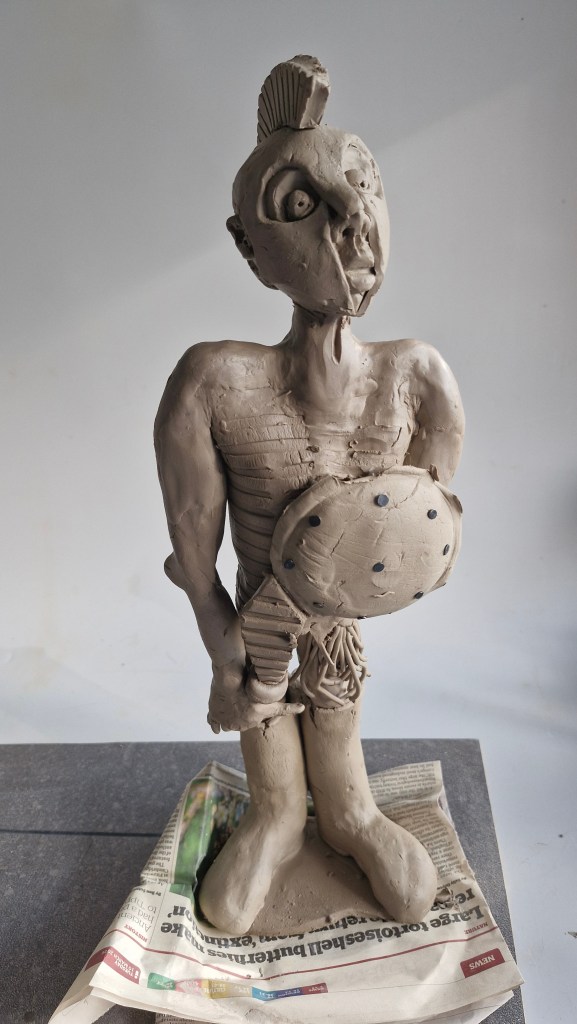
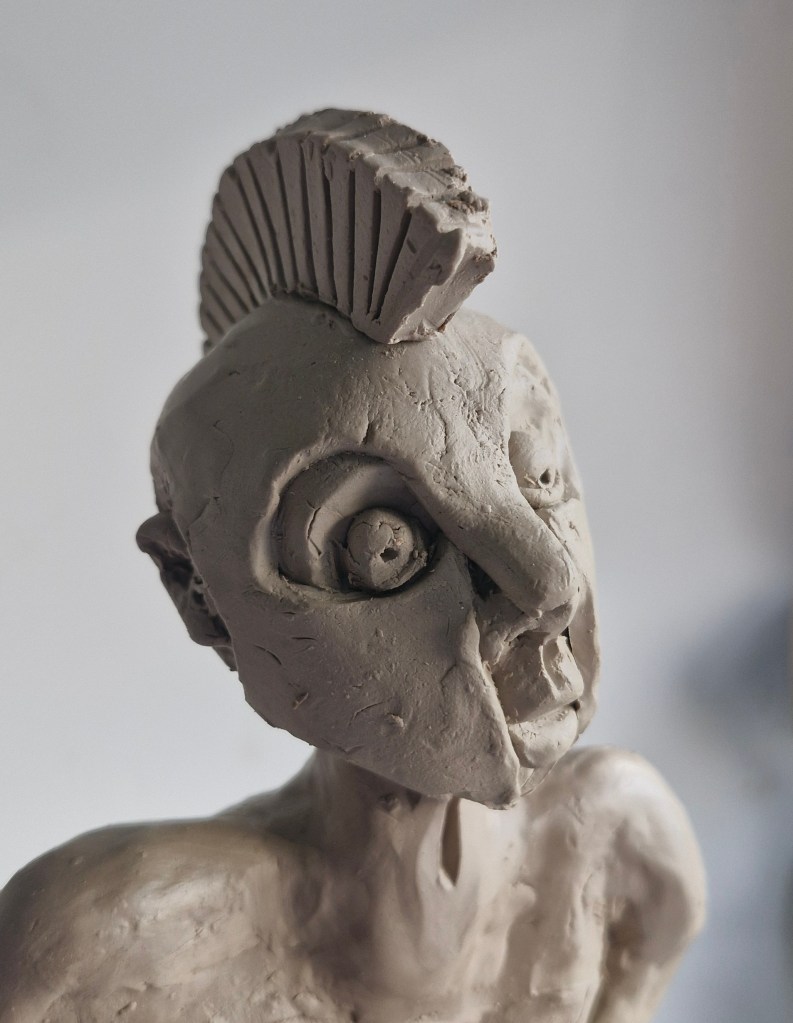
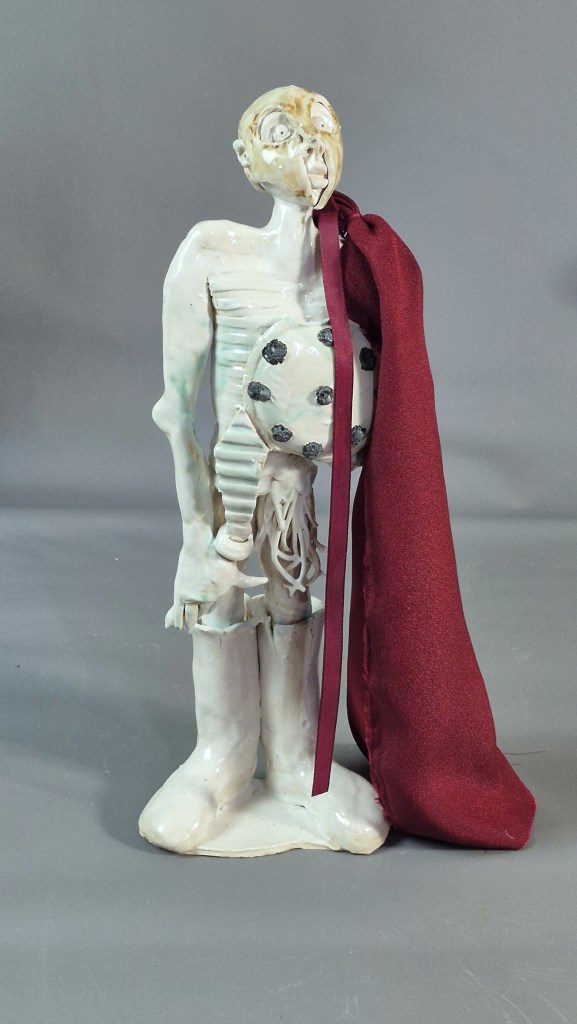
Emily Wilson’s straightforward, energetic translation incapsulates my feelings about the complex hero Odysseus. My Odysseus is a young, vulnerable man at the start of his adventures. He is 60 cm tall – the size of my kiln. Now fired he wears a splendid red cloak. Finally he will have a dark red plume on his helmet which will be gold.
Hera, the Queen of the Greek gods, was the supreme goddess of marriage, family, and women. As the patroness and protector of married women, she presided over weddings and safeguarded women during child birth. Hera had a reputation for being jealous about Zeu’s illicit lovers and children – who can blame her, but remained the ultimate symbol of the devoted mother in Greek relligion.
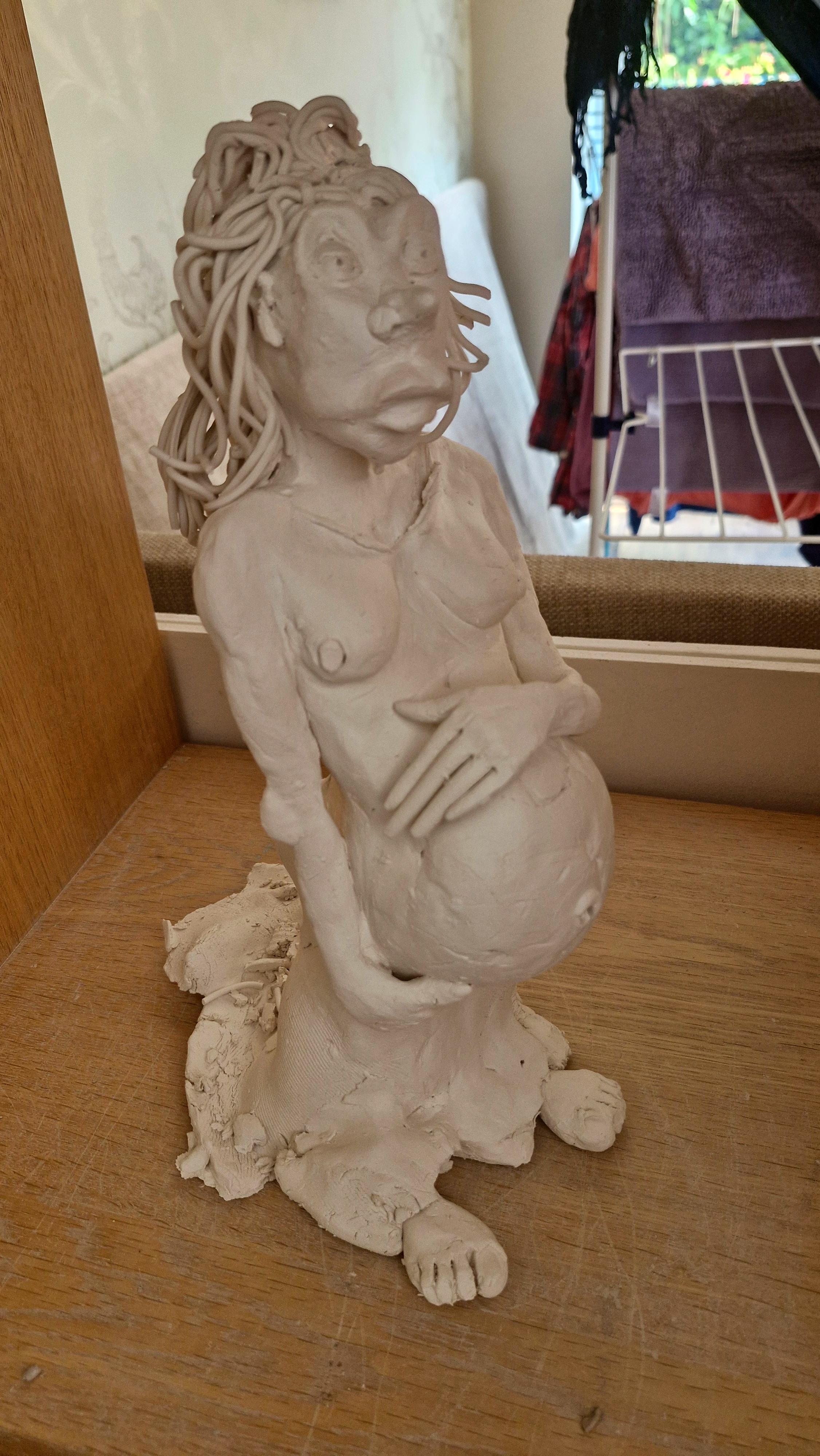
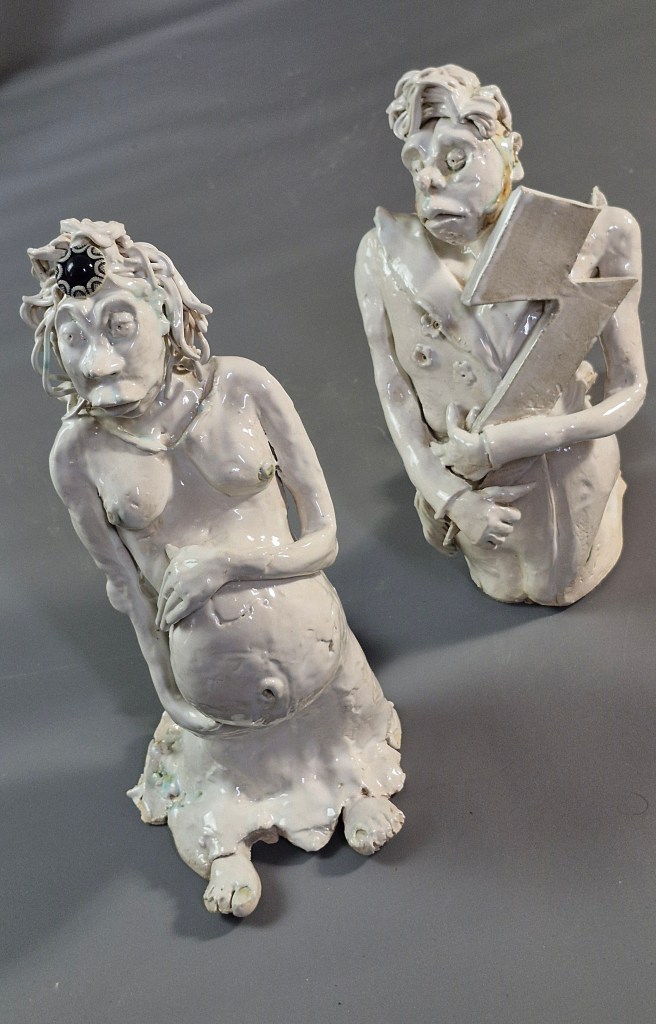
My Hera is a tired, pregnant glamour queen. Her glamorous hair do and botox lips all suggest that she has money to spend. Eventually three children will trail behind her emphasising her role as a fertility goddess. Here she is with her ageing rock god husband, Zeus, clutching on to his thunderbolt for all he’s worth.
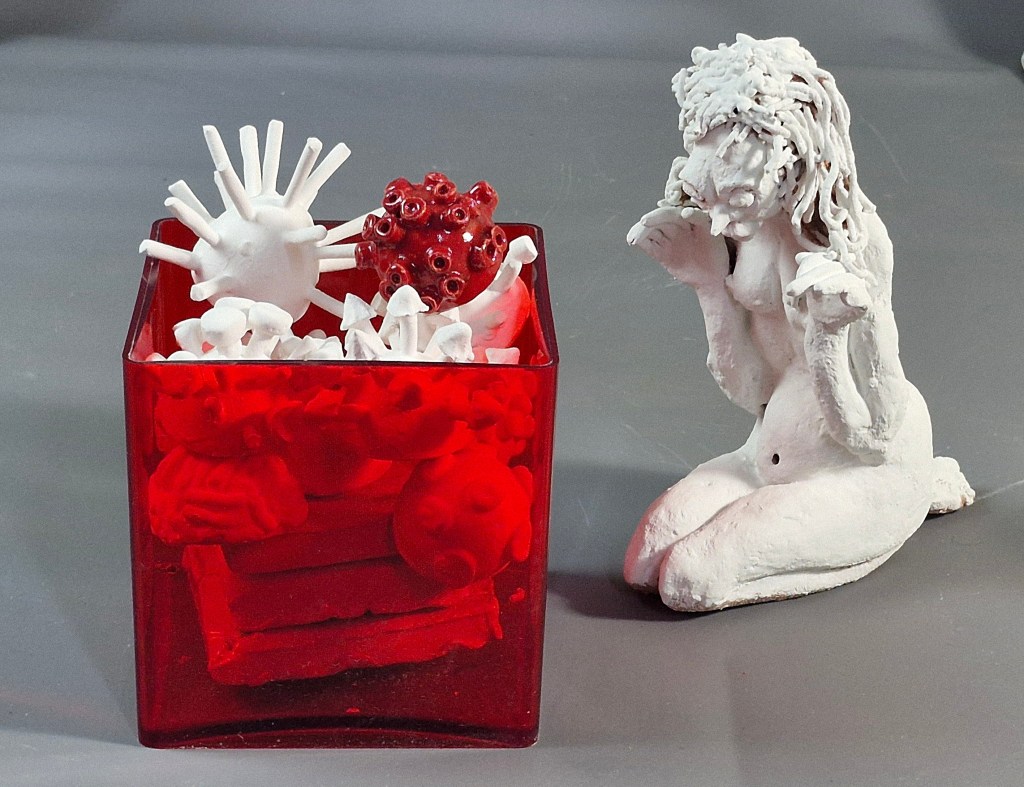
Pandora, according to Greek myth, was the first human woman, created by Hephaestus on the instruction of Zeus.
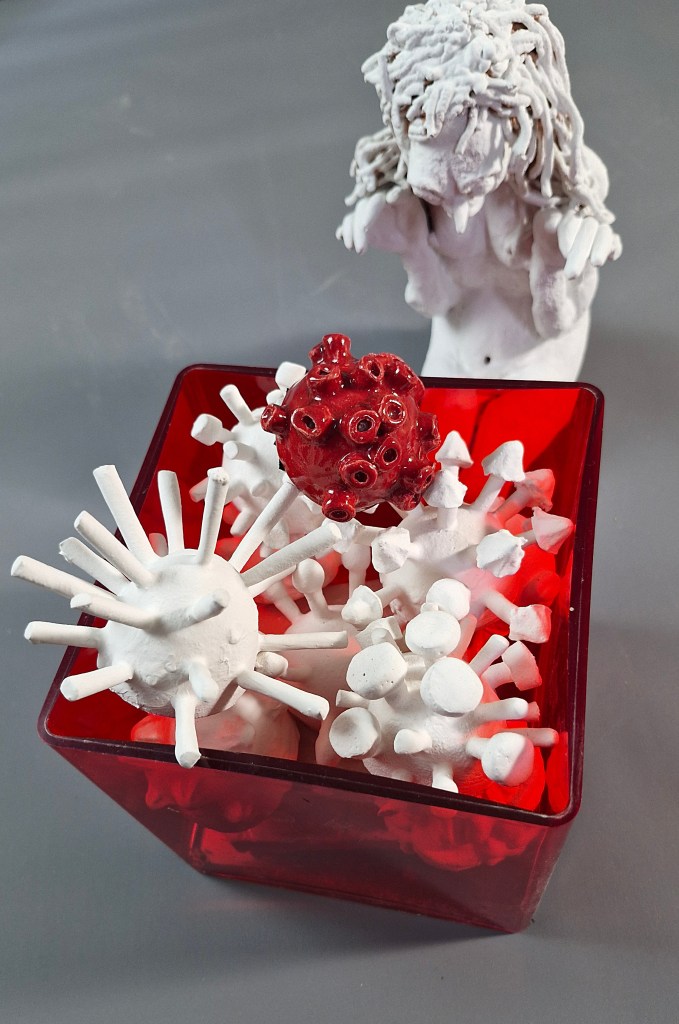
Big red box
The Pandora myth addresses the question of why there is evil in the world. Pandora is said to have opened a jar releasing all the evils and ills of humanity. It has been argued that Hesiod’s interpretation of Pandora’s story went on to influence both Jewish and Christian theology and so perpetuated her bad reputation into the Renaissance. Her story continues to fascinate.
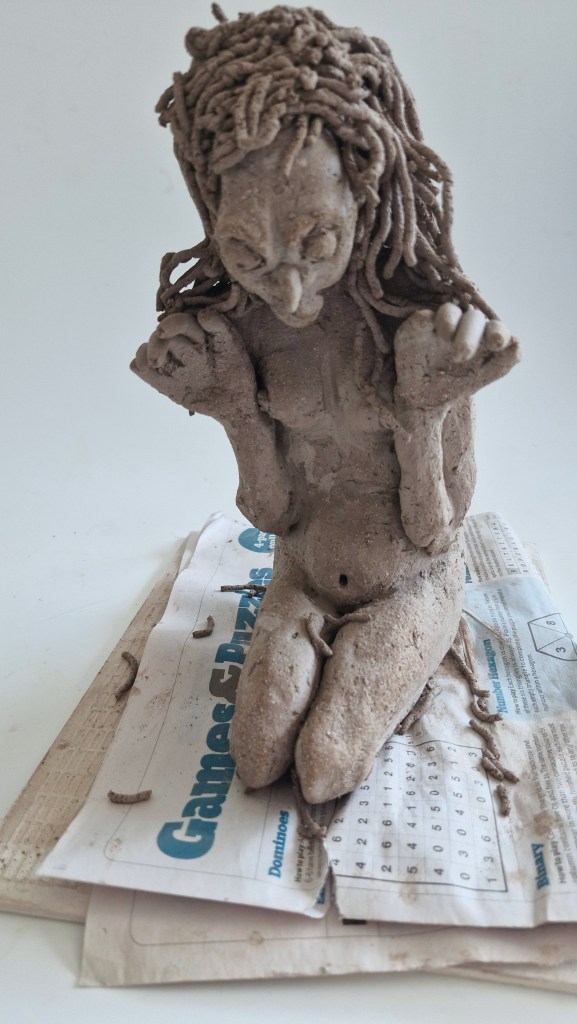
My horrified Pandora looks into a very modern red plastic box containing viruses representing the ills of humanity. The world’s quite recent experience of the Covid pandemic, the continuing Ebola outrage and the increasing rates of HIV inform my choice of using this symbol.
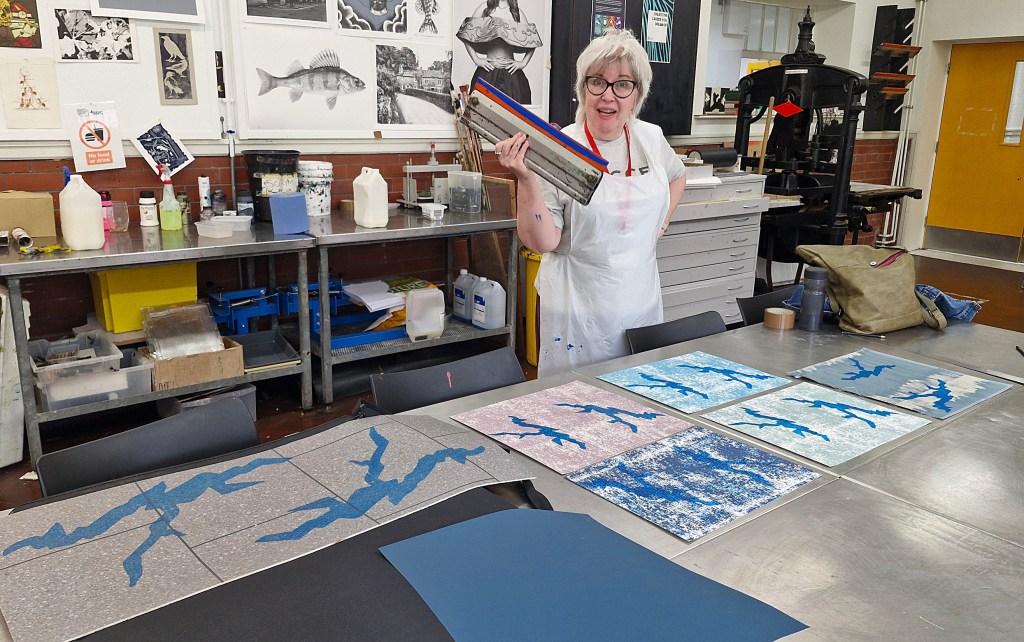
I am making screen printed cracks in lino to create a look of a crumbling earth surface for my Cracked Myths world. The lovely people in Blackpool School of Arts, Brendan Shaw and Paula Smithson helped me make these. The cracks are mainly printed onto linoleum so they are sturdy for exhibition purposes, others we did on paper and textile to experiment with the process. Thats me posing for the camera in the print room.
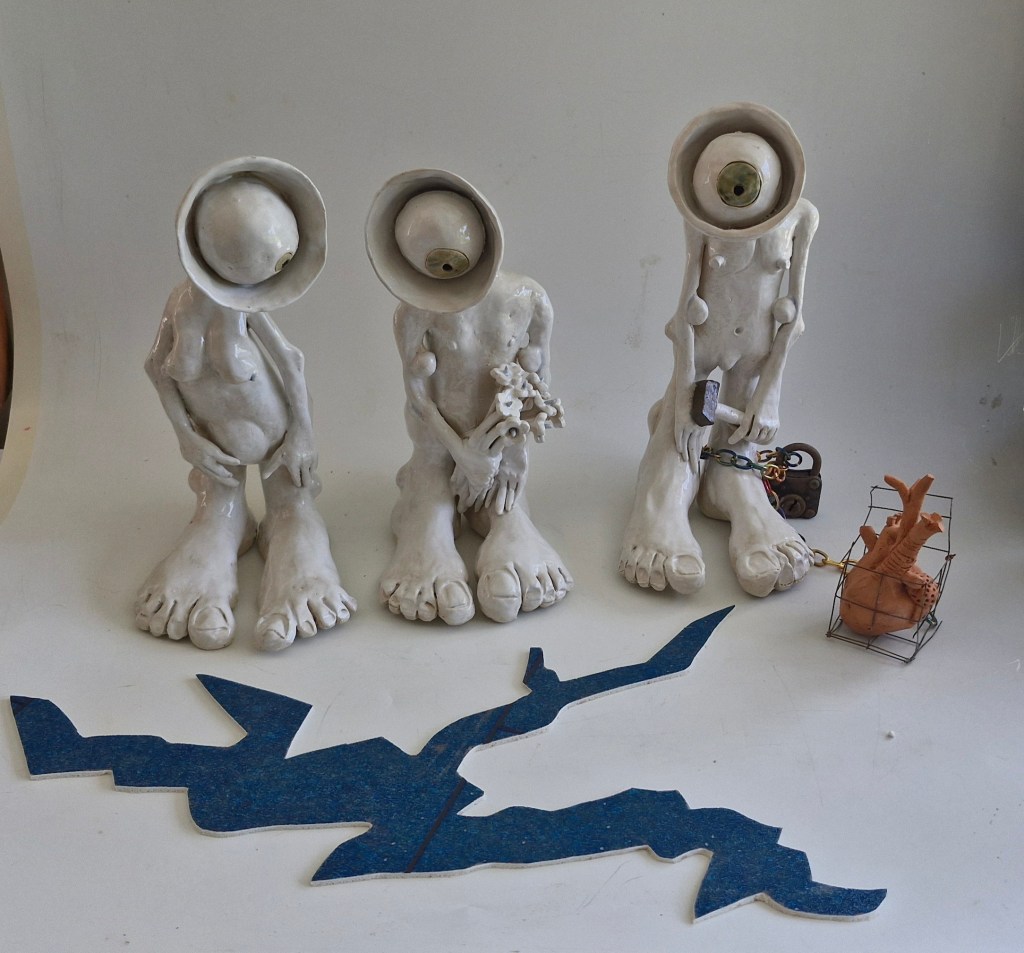
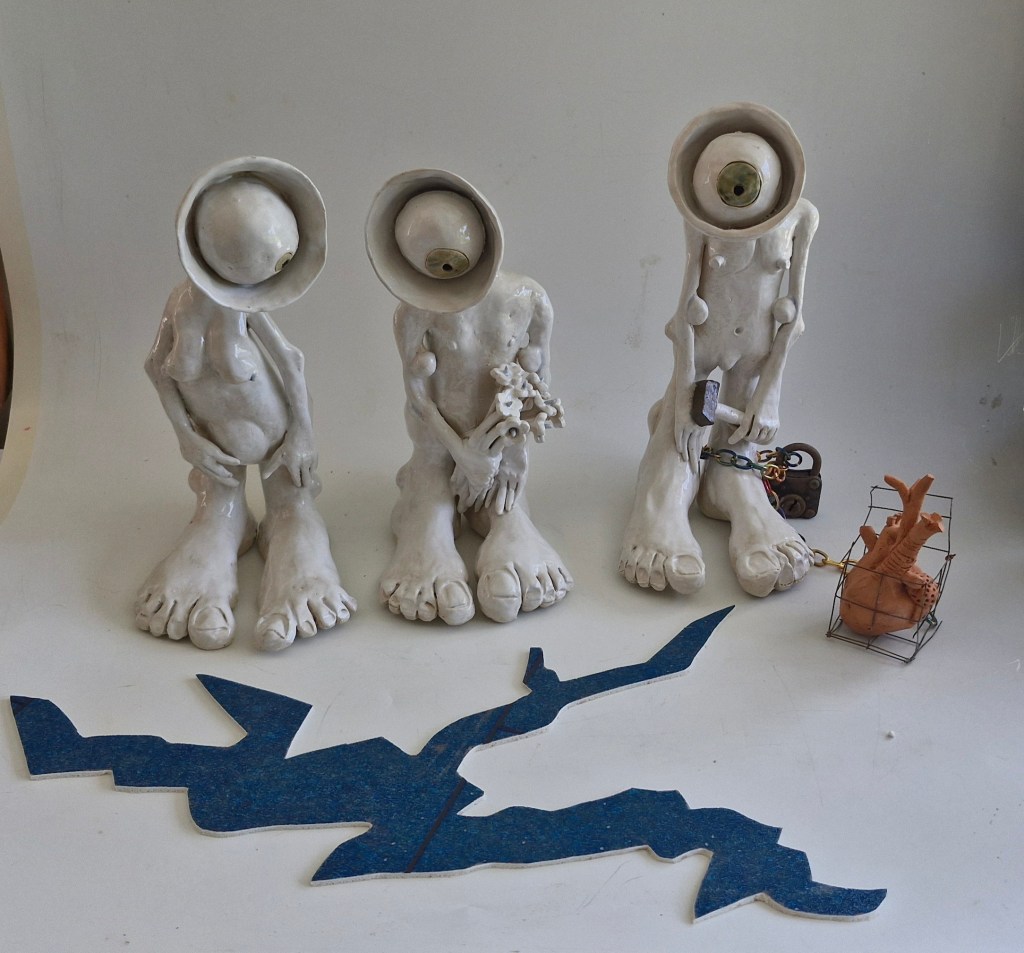
The three Cyclopes with their surveillance camera eyes are a re-working of the myth. Rather than being Zeus’s blacksmiths they are caught in a complicated love triangle. The voluptuous figure onthe far left is looking at her suitor with a bunch of flowers whilst the only blacksmith of the trio looks on with his heart in a cage by his feet.
The Cyclopes trio stand looking at the crack in the earth that will be forming part of the Cracked Myths dystopia landscape.
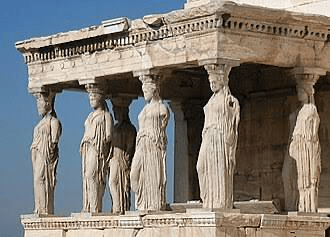
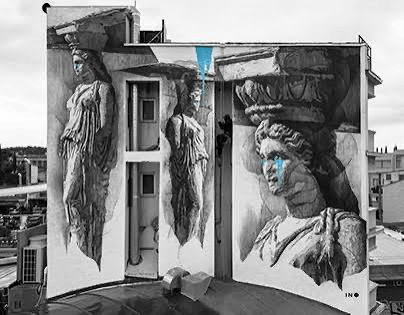
Athens uses its walls for political protest, economic commentary, and modern storytelling. The districts most famous for graffiti are Psyrri, Exarchia and Monastiraki (Ermou Street). The famous 2023 mural Caryatids Crying by the artist INO is in Ermou Street. Here you can see the famous Ancient Greek figures weeping about the state of modern Greek politics and culture. This is most definitely a modern example of a cracked myth. The Caryatids are the daughters of Athens.
Originals
INO’s murals
But who were the Caryatids?
These six sculpted female figures replaced traditional stone pillars to support the Erechtheion temple on the Acropolis. Carved from marble in420 BC. The popular legend suggest that these figures represent women of Caryae. The town betrayed Greece by forming an allegiance with Persia and as a punishment, the men were killed, the women enslaved forced to forever carry heavy loads.
And what is their significance to modern Greece?
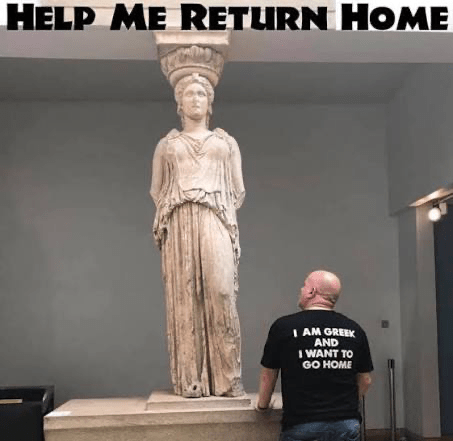
Cultural Restitution In the early 19th century Lord Elgin removed one of the sisters who now sits all alone in the British Museum, London. In the early 19th century, Lord Elgin removed one of the six original sisters. Today, that statue sits in the British Museum in London, whilst her five siblings reside in the climate-controlled Acropolis Museum in Athens. Their separation is a metaphor for the returned of contested historical artefacts. It is a story we are not often told in the UK.
State Identity and Heritage The Caryatid represent an important sense of what it is to be Greek and strength in a time of adversity. They remind the modern public of an unbroken link between ancient ideals and contemporary society – and are a powerful link to my own artistic work Cracked Myths
I have just finished making my first screen print earthquake on Lino – the remainder of the bathroom floor covering with Paula and Brendan from Blackpool School of Arts. I tried it out with the Cyclopes to see if it suits and am very happy with the result. It has a Pop Art feel to it which I like and suits my ceramics figures well.