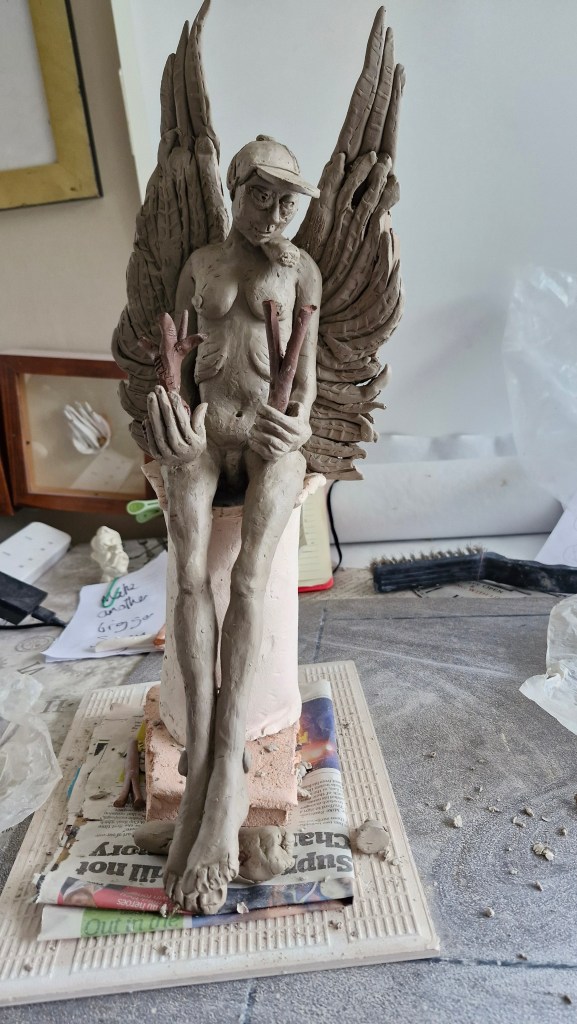
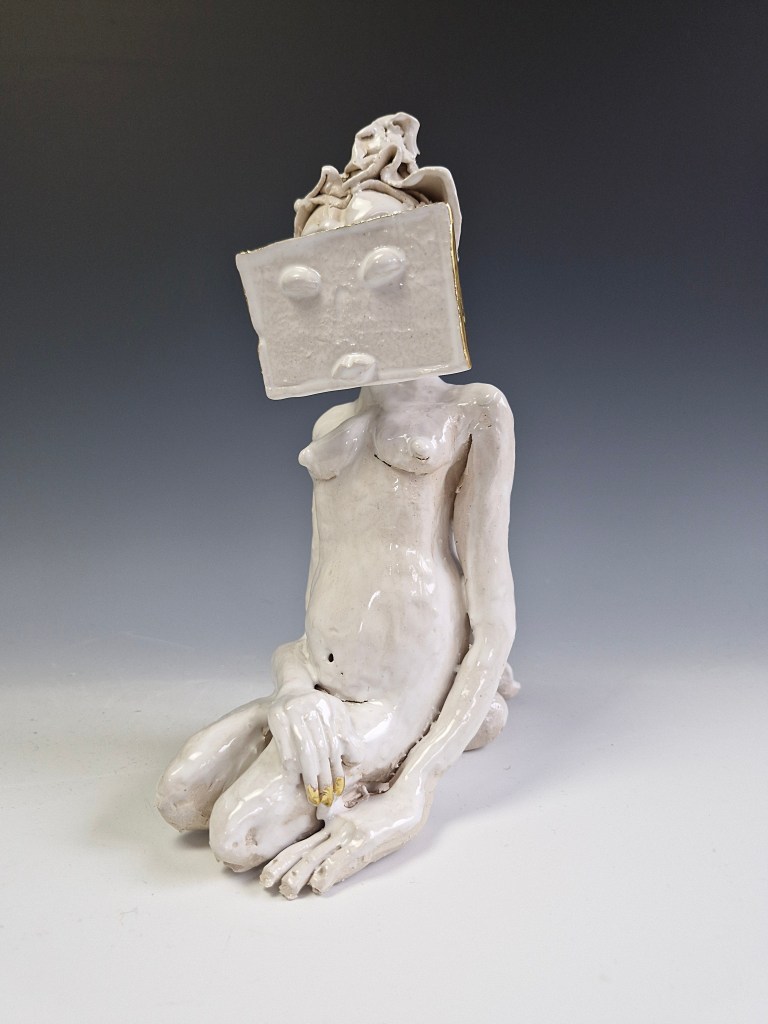
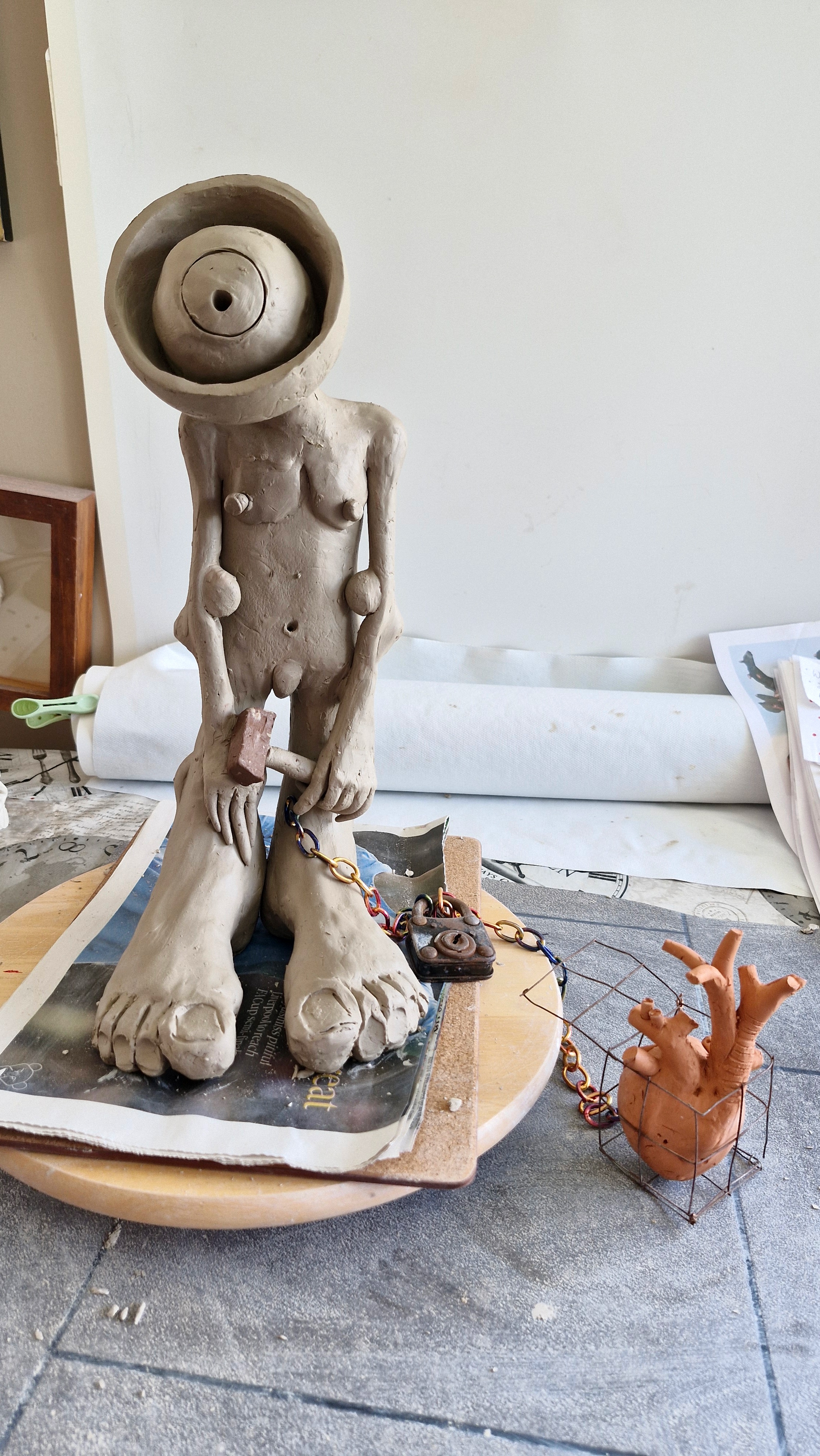
Early days for Eros God of love, sex and passion. You can view him as a primordial cosmic force of the naughty winged son of Aphrodite. The name is also used to describe passionate love, and psychological life drives. My Eros is a pizza delivery boy with a real heart in one hand and a catapult in the other.
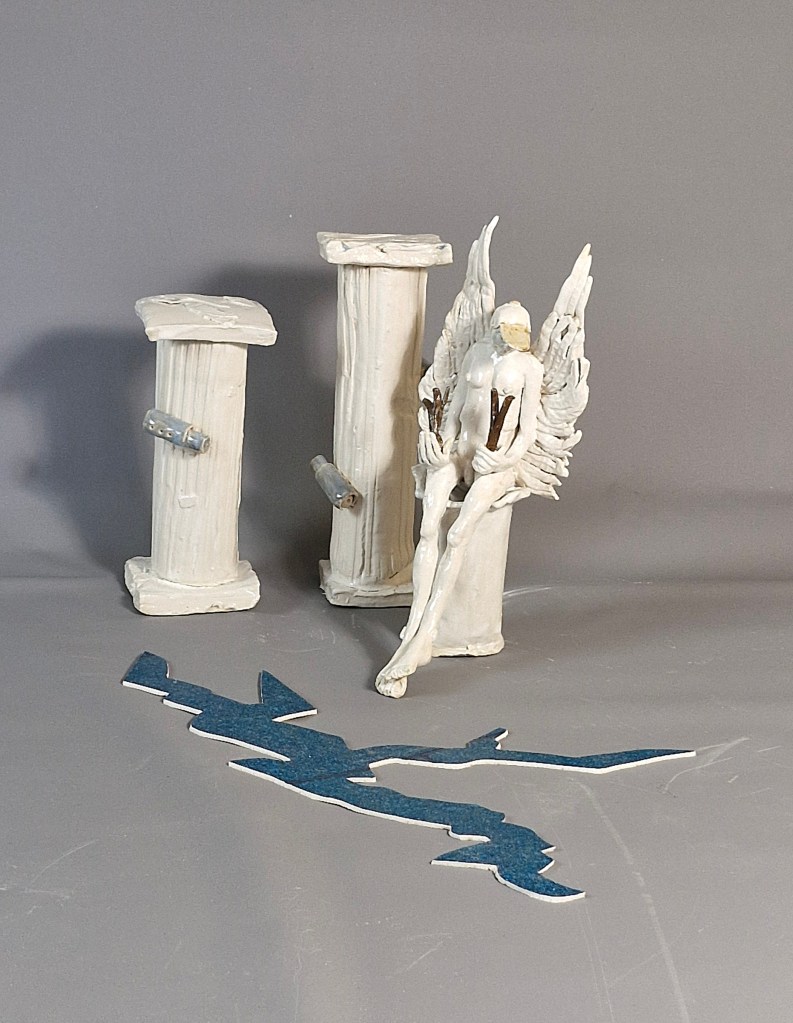
This Eros will eventually sit on top of a broken down Graeco Roman pillar deciding who he is going to catapult a heart to. Watch out……
In the end it was safer to let Eros sit on his firing seat… Ultimately, it will be painted with graffiti and his pizza boy delivery cap will be decorated with gold lustre.
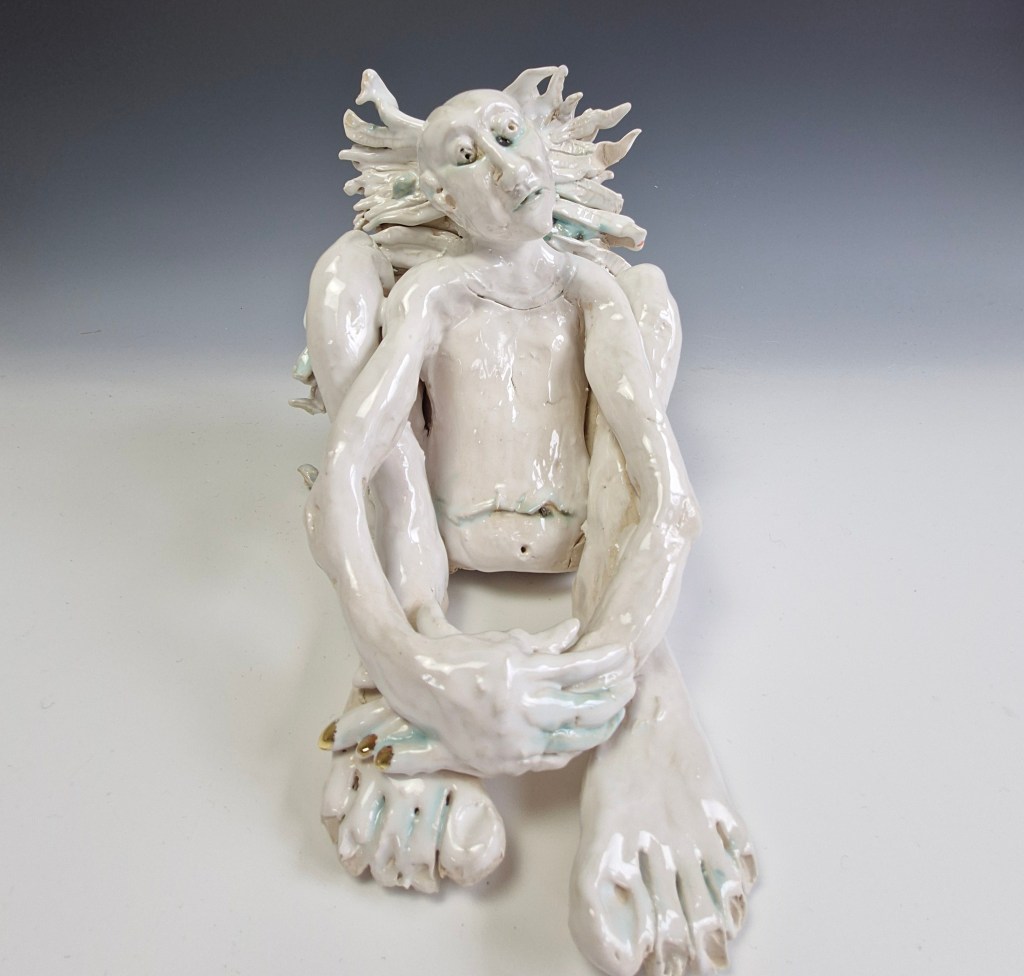
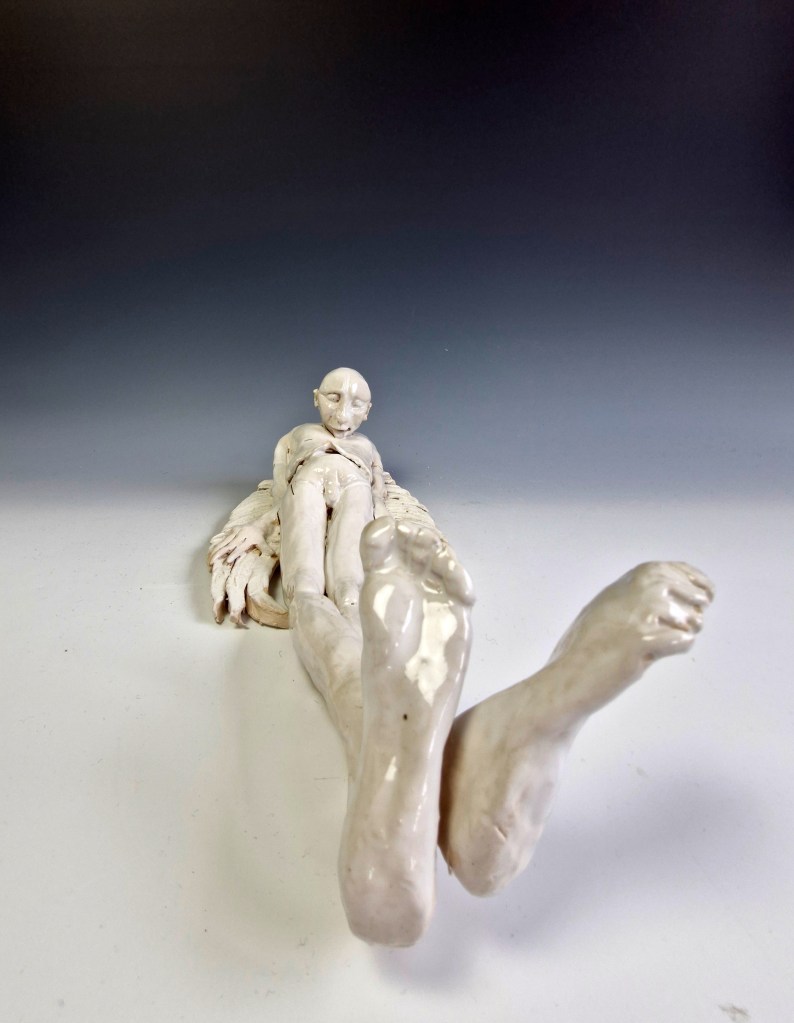
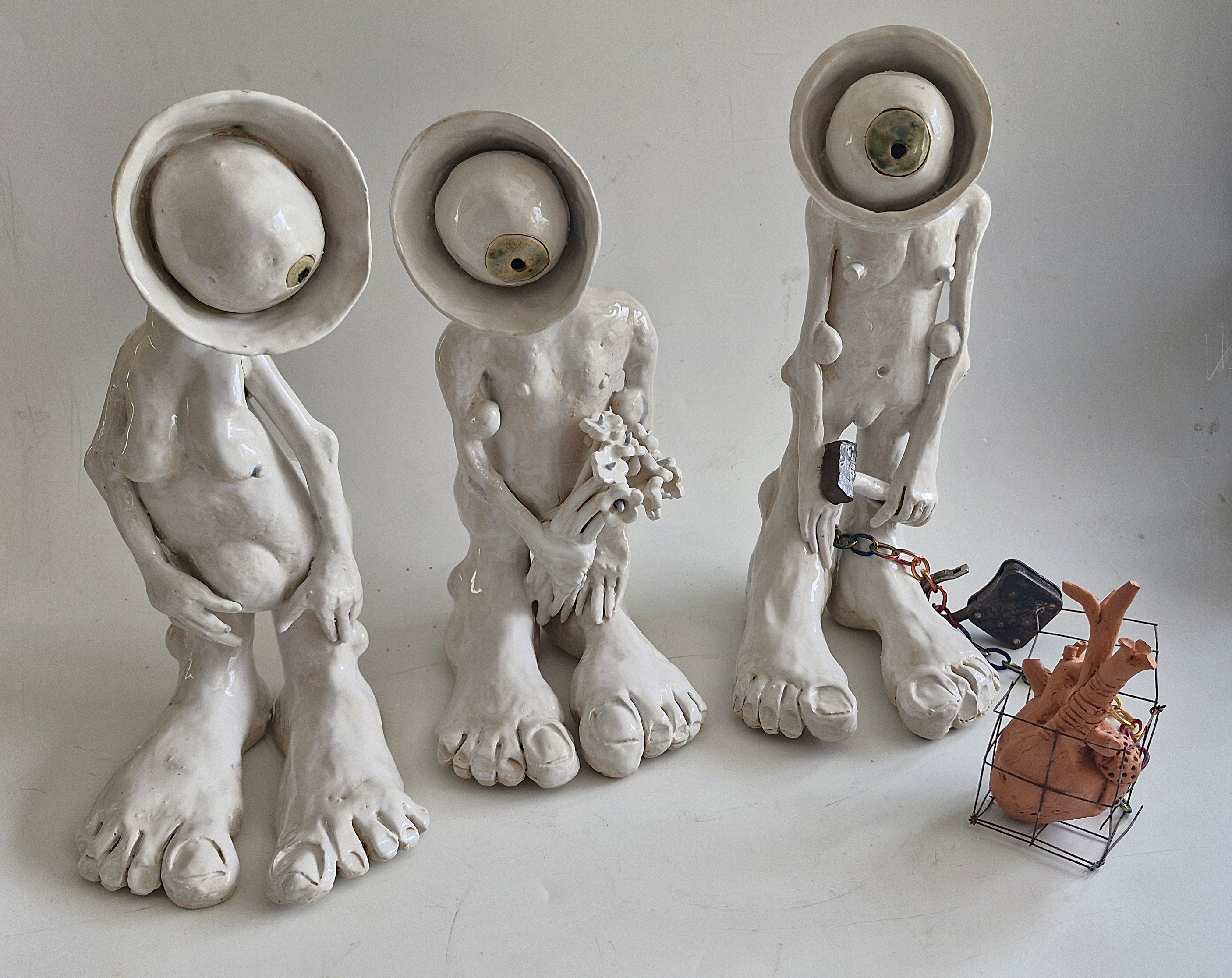
Best known for his ill-fated attempt at flight with wings held together with beeswax. Not actually a god but nevertheless unforgettable. Although Icarus is not strictly a god his story has been re-pimagined countless times flying too close to the sun and getting his fingers turnedComparisons are inevitably made with political figures such as John F Kennedy who flew too close to the sun in more modern times. I have made a set of Icarus figures which describe his venture from ambition, fall to regret and I call it the Icarus Project. I think only the long legged Icarus will be included in the cracked Myths installation because the Icarus Project is very much its own story.
In my work I explore themes of consumer culture, environmental recklessness, and socio-political global conflict in ceramic. In my last work Shed Salty Tears the debris left on our beaches reveals plastic’s wider implications for our environmental health, marine ecosystems and how both marine and human populations can survive. This was a 21st century environmental dystopia.
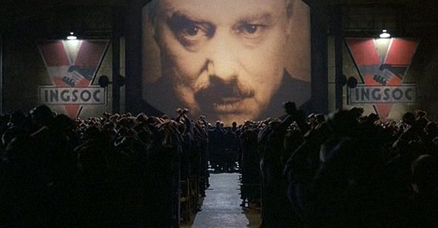
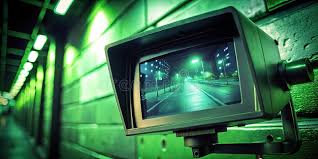
For my next work Cracked Myths I decided to look to ancient cultures to draw comparisons with our modern world and the downfall of powerful ancient civilisations. I also draw connections between dystopia and modern surveillance society. Modern society has incorporated Surveillance culture into our daily lives with alacrity, allowing huge corporations to harvest our private date, monitoring our movements, checking our social media use and community policing.
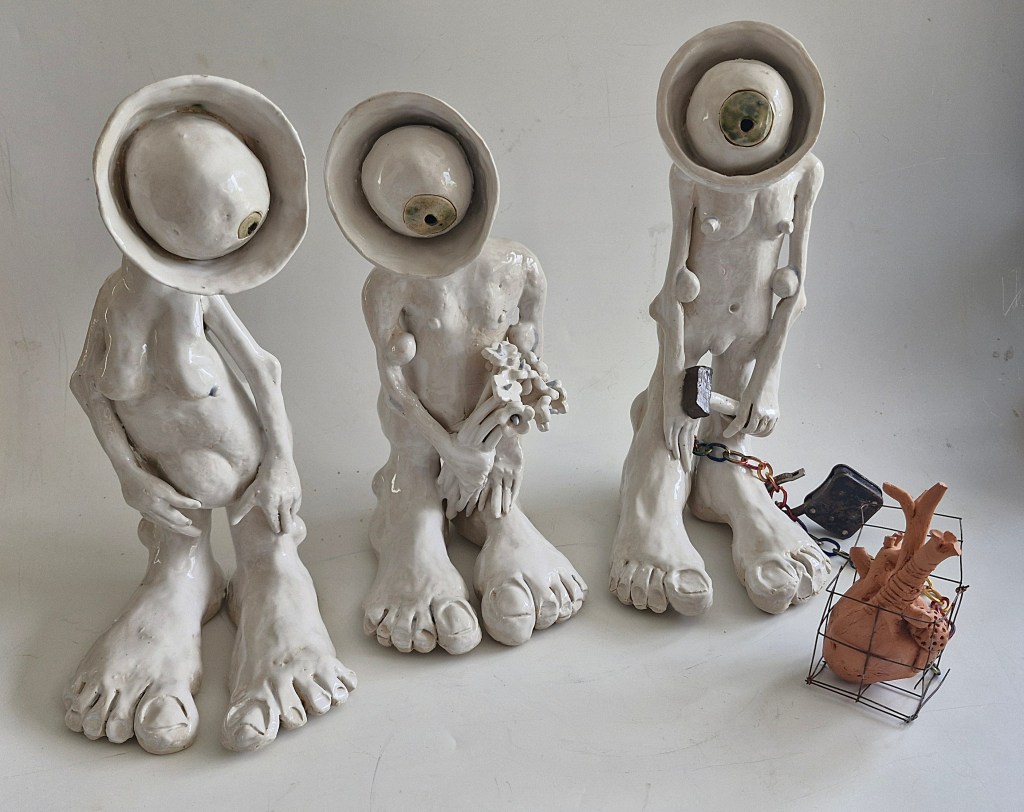
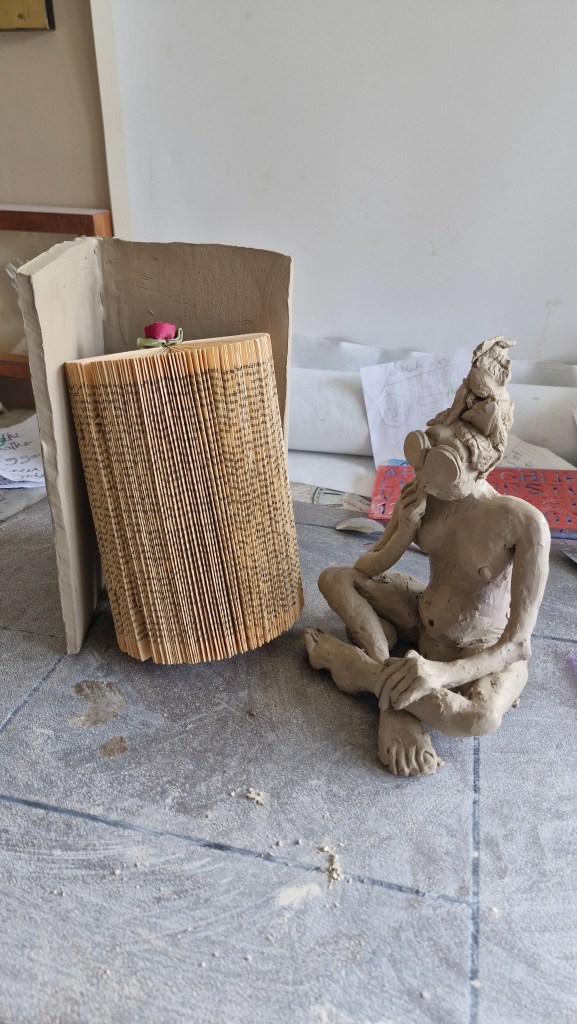
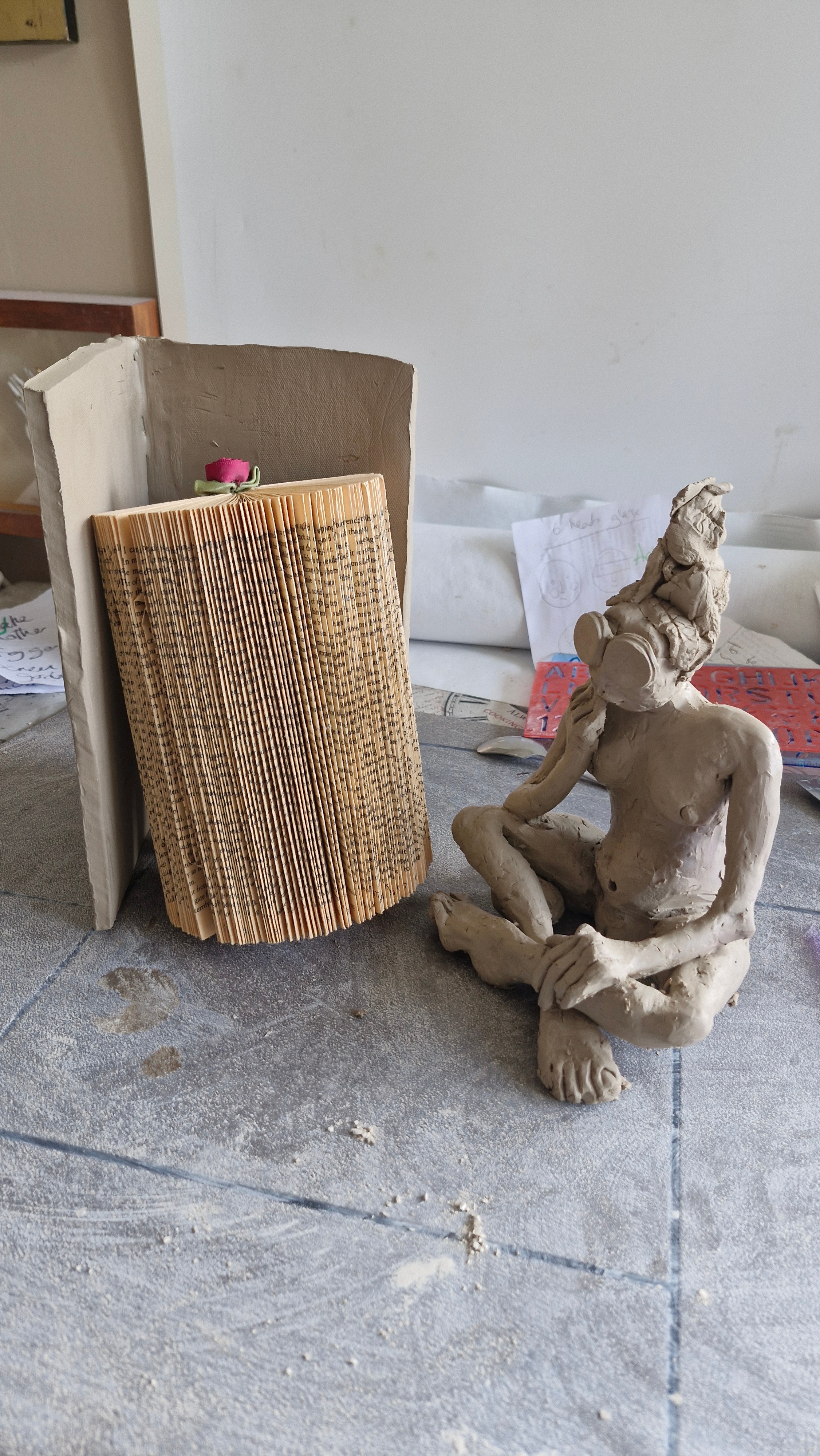
Cracked Myths, albeit set in an ancient world, comments on this. Graeco Roman pillars have surveillance cameras attached to them, the three Cyclopes have surveillance camera eyes as does the nerdy Goddess Clio with her huge spectacles reading her Cracked Myths book Clay Surveillance for more.
How to create a ceramic dystopia?
An environment of broken Roman pillars, re-imagined gods and goddess, monsters and creatures emerging from Hades is starting to appear. Structures and figures will have cracks deliberately cut into them: apart from symbolising an earthquake they will symbolise the passage of time, the fragility of humanity, and the endurance of classical art. They explore the idea that beauty is not complete without bearing traces of suffering or damage.
In contemporary art, cracked sculptures are sometimes reimagined using the Japanese kintsugi technique (repairing broken pottery with gold), highlighting the beauty of repairs.
The history of Kintsugi
Kintsugi is the ancient Japanese technique of preparing broken ceramics. The cracks and blemishes are painted with gold, silver of platinum lacquer. so, rather than disguising the cracks, they are highlighted to celebrate the history of the object and to realise the beauty in imperfection
Rooted in the Japanese philosophy of wabi-sabi (accepting transience and flaws), the Kintsugi philosophy suggests that a repaired piece is often more beautiful and unique than the original. This is a modern example produced by the artist Billie Bond.
How it is done
Traditional kintsugi uses urushi (a natural Japanese lacquer) mixed with gold, silver, or platinum. Modern methods often use accessible epoxy resin combined with gold mica powder for a similar aesthetic, or even gold paint.
Why am I using Kintsugi?
I intend that the Kintsugi will highight the effect of a damaging earthquake on human forms and buildings. I will deliberately deface some figures to symbolise the passing of time, the fragility of humanity, and the endurance of classical art. They explore the philosophical idea that beauty is not complete without celebrating scaring, suffering or damage.
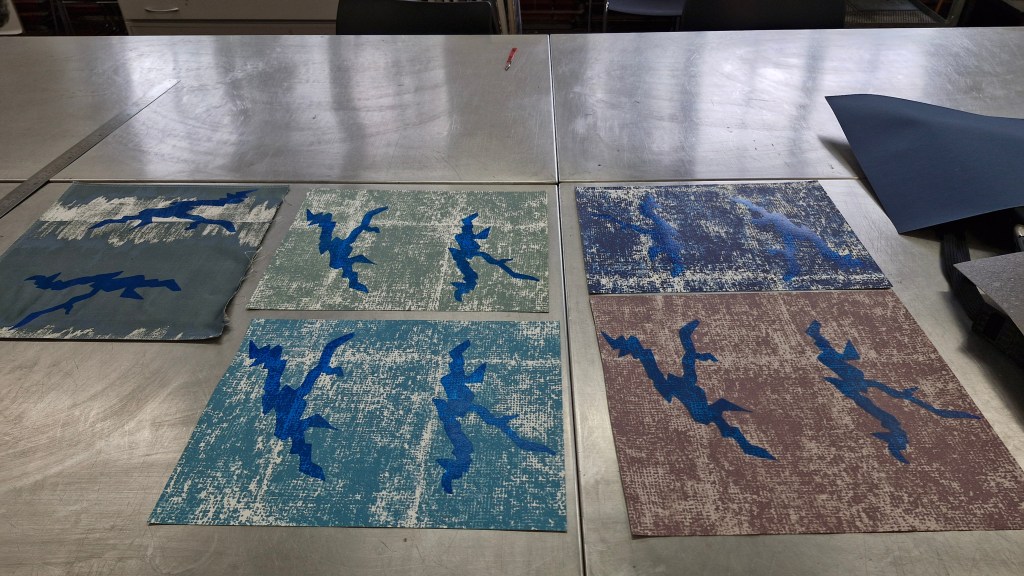
The cracks in the installation suggest that established myths—whether personal, societal, or historical—are fragile and ultimately unable to withstand the pressures of time. I will create earthquake cracks screen printed on to the substantial surface of Lino to ensure it is stable for exhibitions. I will also create a ceramic earthquake piece using the same design shown below.
Forced Evolution
Just as a fault line fundamentally alters a landscape, the sculptures suggest that a massive upheaval or “earthquake” is necessary to break old paradigms and allow new growth.
Societal Instability
Using a violent natural disaster in an artwork often mimics the unpredictable, chaotic nature of political, social, or environmental collapse.
Structural Vulnerability
They expose the literal and psychological tensions inside rigid structures and in the earth’s surface.
Modern society has incorporated Surveillance culture into our daily lives with alacrity, allowing huge corporations to harvest our private date, monitoring our movements, checking our social media use and community policing. Cracked Myths, albeit set in an ancient world, comments on this. Graceco Roman pillars have surveillance cameras attached to them, the three Cyclopes have surveillance camera eyes as does the nerdy Goddess Clio with her huge spectacles reading her Cracked Myths book.
Surveillance Capitalism
Modern surveillance culture is deeply driven by the profit motive. Huge tech companies monitor our use of searches, clicks, location and purchases to build personal profiles, which in turn targets advertising to make you buy even more. But people seem to accept the trade-off between invasive tracking in exchange for easy digital services, personalised entertainment, and security.
Social & Everyday Surveillance
People use digital tools themselves to monitor their friends and families using location-sharing and home security networks to keep tabs one people.
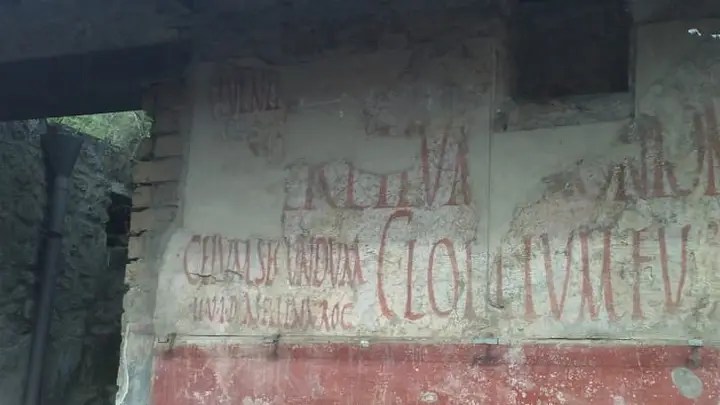
I am intending to decorate the ancient pillars with graffiti. I really like this example from a Pompei pub.
“YOU LOVE IRIS, BUT SHE DOES NOT LOVE YOU.”
These ancient, informal records read like overheard gossip. I will have to choose my own.
Translated examples include:
Sarcastic:“Put a saw under the garden gate.”
Insulting:“Sosinous is a lecherous fellow.”
Party Invites:“Boy, bring new couches for the symposium.”
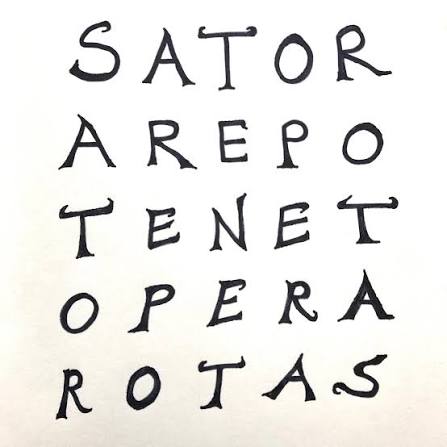
SATOR Square
While a precise, poetic translation is debated by Latin scholars, the individual words broadly mean:
SATOR: Sower or planter
AREPO: Likely a proper noun or an invented name
TENET: Holds or keeps
OPERA: Works, labor, or care
ROTAS: Wheels
Broadly meaning that the “The sower Arepo holds the wheels with care”. [1]
History, magic and religion
The oldest known SATOR square
The oldest known squares have been found in the ruins of the ancient Roman city of Pompeii, dating prior to 79 CE. Other notable early examples have been excavated in Cirencester, England and Budapest, Hungary.
Christian Symbolism
Because the letters can be perfectly rearranged to form a cross of the words “Pater Noster” (the “Our Father” prayer) along with the Alpha and Omega symbols, many historians believe it was a covert symbol for early persecuted Christians.
Medieval Magic
Throughout the Middle Ages and into the Renaissance, the square was embraced as a powerful magical talisman. It was widely believed that writing the words on parchment or bread could extinguish fires, cure dog bites, and relieve insanity